

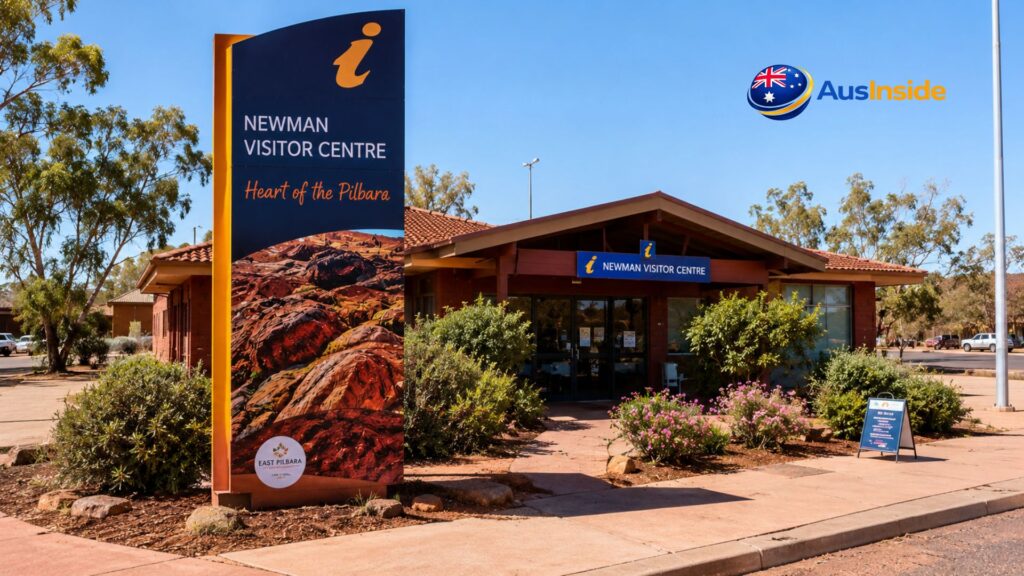
Pull up to Newman after hours of driving through red-dirt nothing and the Visitor Centre hits differently. You were half-expecting a sad rack of brochures and a cheerful laminated sign pointing to the “town attractions.” What you get instead is a proper, accredited information hub with genuinely knowledgeable staff, a mine tour that will reset your sense of scale, the best coffee in town, and a doorway into one of the most underrated regions in all of Western Australia.
Newman sits roughly 1,186 kilometres north of Perth — past the Tropic of Capricorn, deep inside the Pilbara — and most Australians have never given it serious thought. That’s a mistake worth correcting. The town was purpose-built in the 1960s around what turned out to be the world’s largest single open-cut iron ore mine, and yet its surrounds hold ancient waterhole circuits, 40,000-year-old Aboriginal history, wildflower seasons that transform the red landscape, and access to Karijini National Park less than two hours down the road.
The Newman Visitor Centre is where all of that clicks into place. This guide covers what to expect, what most visitors miss, how to do the mine tour properly, and the things no other travel site bothers to mention.
Have A Look On It: Bupa Visa Medical Centre
- Quick Overview
- How Newman Came to Exist
- What the Newman Visitor Centre Actually Does
- The BHP Mt Whaleback Mine Tour
- The Newman Visitor Centre Chalets
- The Newman Waterhole Circuit — What Most Articles Miss
- Hickman Crater — The Genuinely Hidden Gem
- The Aboriginal Cultural Dimension
- When to Go — Real Talk
- Getting There
- Things Guiders Don't Tell You
- Key Takeaways
- FAQs
Quick Overview
| Address | Corner Fortescue Ave & Newman Drive, Newman WA 6753 |
| Phone | (08) 9175 2888 |
| nvc@eastpilbara.wa.gov.au | |
| Rating | 4.3/5 on Tripadvisor — #1 of 5 things to do in Newman |
| Mine Tour Price | Adults $35 · Seniors $30 · Children (3–13) $20 · Family $90 |
| Mine Tour Departs | 9:15am daily (minimum 10 passengers required) |
| Flights to Newman | Daily direct from Perth — ~1 hr 45 min (Qantas & Virgin) |
| Best Season | May to October |
| Chalets on Site | Yes — rated #1 guest house in Newman (4.7/5) |
| Distance to Karijini | ~191 km (approx. 2 hours) |
How Newman Came to Exist
The backstory matters, because Newman isn’t a town that grew naturally over centuries. It was dropped into the Pilbara by an iron ore company.
In 1957, a veteran prospector named Stan Hilditch discovered a colossal iron ore deposit that, from above, resembled a surfacing humpback whale. He named it Whaleback. The Mount Newman Mining Company — a subsidiary of BHP — built the entire town in the mid-1960s to house the workers and families that operating the mine required. Roads, houses, schools, supermarkets: all constructed deliberately in marginal desert country 15 kilometres north of the Tropic of Capricorn.
The town takes its name from explorer Aubrey Woodward Newman, who famously planned an expedition to the region in 1896 but died of typhoid before it happened. Before any of this, the first European to observe iron ore deposits near present-day Newman was Francis Gregory, back in 1861.
But far before any European arrived, these lands had been continuously occupied. The Nyiyaparli People are the Traditional Owners of approximately 36,684 square kilometres of land and waters in the East Pilbara region, including the township of Newman, and their occupation of this land can be verified to at least 41,000 years — the second oldest on record in Australia. That’s roughly 1,600 generations. The Visitor Centre helps visitors understand this history rather than skim past it.
Google Map View
What the Newman Visitor Centre Actually Does
The Accreditation Actually Matters
The Newman Visitor Centre is located in the heart of Newman, adjacent to the shopping centre. Staff offer visitors knowledge of the area and maps to explore the outback — within just two hours, you can reach spots for 4WDing, hiking, fishing, kayaking, swimming and rock climbing.
The accredited status means the team meets nationally recognised standards for local expertise — they’re not seasonal casuals reading off a board. Travellers consistently note they received information here that’s simply not available online: which waterholes are currently running, which 4WD tracks are passable, real-time Karijini road conditions.
What You Can Do Here
- Book the BHP Mt Whaleback Mine Tour — exclusively through the Visitor Centre
- Get BHP rail-access permits for Kalgan Pool, Three Pools, Eagle Rock Falls, Punda Pool, and Hickman Crater — this is something most travel sites completely forget to mention
- Collect the mud map for the Newman Waterhole Circuit, which you genuinely need before heading out
- Purchase and browse locally made products — ceramics, glasswork, woodcraft, contemporary jewellery, and the famous model CAT trucks
- Ask about current wildflower and waterhole conditions — this changes week to week and the staff actually know
- Book one of the six on-site chalets if you need a place to stay
- Have a coffee — multiple reviewers independently single it out as the best in Newman
The BHP Mt Whaleback Mine Tour
This is the headline act, and it deserves more than a quick mention.
The Scale Is Genuinely Difficult to Process
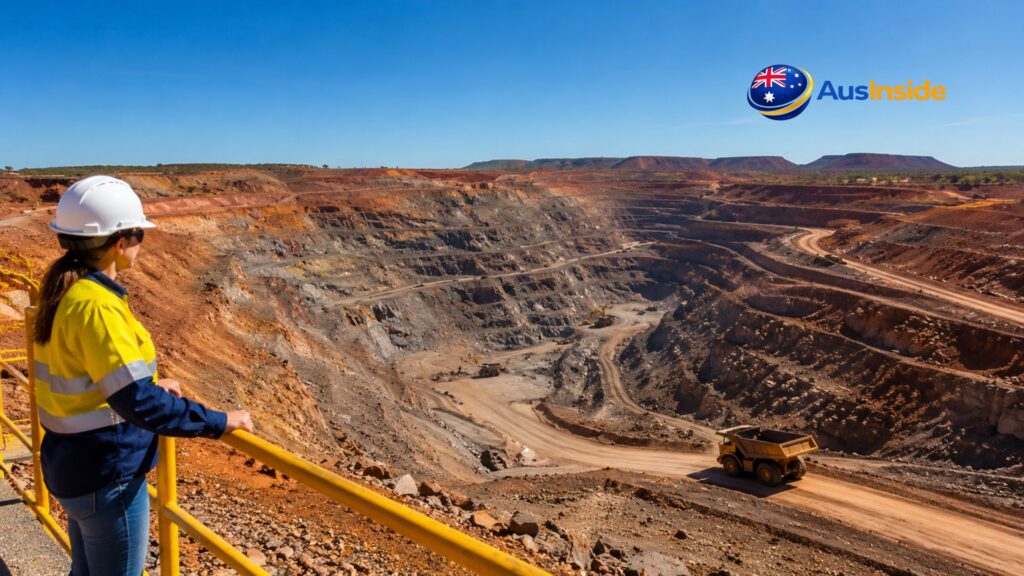
Mount Whaleback spans an impressive one and a half kilometres wide and five kilometres long, making it the largest open pit iron mine in the southern hemisphere. The haul trucks working inside it carry 300-tonne payloads. Their tyres alone stand taller than most adults. Standing at the rim and looking down at trucks that look like toys is an experience that tends to produce genuine silence in people who were chatting ten minutes before.
The iron ore deposit was named Whaleback because it resembled the shape of a humpback whale. It was discovered in 1957 by veteran prospector Stan Hilditch.
Tour Details at a Glance
| Detail | What to Know |
|---|---|
| Departure | Newman Visitor Centre, 9:15am |
| Duration | 1.5 to 2 hours |
| Minimum passengers | 10 people — no minimum, no tour |
| Arrive | 15 minutes before departure |
| Children under 3 | Free, must stay with adult |
| Booking | Call (08) 9175 2888 or book online |
The Dress Code Is Non-Negotiable
Fully enclosed shoes, long-sleeved tops to the wrists, and long pants to the ankles are essential. Three-quarter sleeves and trousers are not acceptable. Visitors do leave the bus and walk on the mine site. Show up in shorts and thongs, and you won’t get on — regardless of how far you’ve driven.
Bring water. Especially between September and April.
What the Experience Is Actually Like
The bus takes you into and around an active, working mine. A guide narrates the history, explains how iron ore moves from extraction through processing to port export, and gives context for what Australia’s iron ore industry actually means economically. You’ll see the working face, the haul trucks in motion, and the full scale of what “resource boom” meant for this region.
Reviewers consistently describe it as modern and informative, with excellent staff — the departure point for the tour bus and a place to get an overview of the pit and operations. On return, morning tour passengers are treated to Devonshire tea — scones, jam, cream, tea or coffee. In the context of a couple of hours in the Pilbara heat, this is more welcome than it sounds.
Book at least one day ahead. If numbers don’t reach ten, the tour doesn’t run. Arriving on spec and hoping for the best is a gamble worth avoiding.
The Newman Visitor Centre Chalets
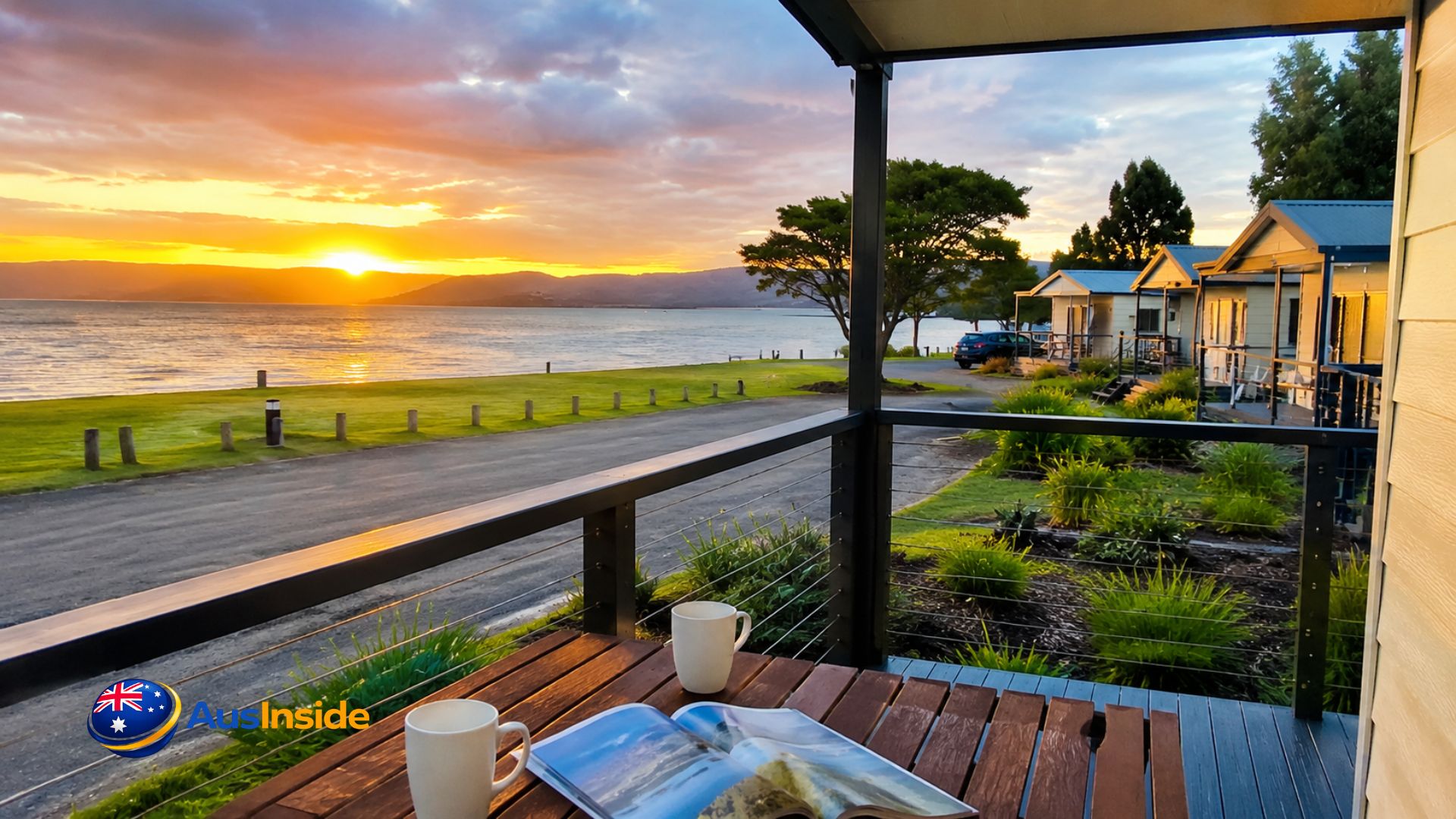
Six chalets situated around some of the first pieces of mining equipment to operate at Mt Whaleback, the chalets are rated #1 guest house in Newman.
They’re spotlessly clean, well-appointed, air-conditioned (non-negotiable in the Pilbara), and come with kitchenettes, refrigerators, and free WiFi. The industrial-heritage character — sleeping within sight of actual antique mining equipment — is unusual and interesting rather than grim.
Practical Note
Your car stays in the visitor carpark, not directly beside the chalet. The area is well-lit and secure. Multiple travellers report no issues. Just know this before you arrive with heavy bags.
Wheelchair-accessible rooms are available. Restaurants within easy reach include Seasons Steakhouse, East West Kitchen, and the Newman Hotel Bistro.
The Newman Waterhole Circuit — What Most Articles Miss
This is the part of the Newman experience that almost no travel blog covers properly, and it’s arguably the best reason to have a vehicle and a day to spare.
Six local, beautiful waterholes include Kalgan’s Pool, Eagle Rock Falls, Wunna Munna, Three Pools, Silent Gorge and Weeli Wolli — some fed by natural spring water, others by flowing waterfalls, all surrounded by native wildlife.
The One Thing You Must Do Before Going
You need a BHP rail-access permit to reach Kalgan Pool, Three Pools, Eagle Rock Falls, Punda Pool, and Hickman Crater. Permits are available through the Newman Visitor Centre — and some safety basics apply: always carry more fuel and water than you think you need, tell someone your plans, and bring a puncture repair kit. The Visitor Centre also hands out a mud map. It’s imperfect, but it’ll get you there.
The Waterholes Worth Knowing
Kalgans Pool — The most accessible and most famous. It featured in the 2003 Australian film The Japanese Story. The 25km drive in along Kalgan Creek crosses several shallow billabongs and requires a capable 4WD. The pool sits inside a scenic gorge of banded-iron formation. Popular campsite, so not always the quietest spot.
Eagle Rock Falls — The payoff for the longer drive. The falls are 12 and 60 metres high during the wet season and offer spectacular views of the cliffs and Coondiner Gorge. The drive from Newman takes 2 to 2.5 hours including around 46km of 4WD track.
Weeli Wolli — A series of waterholes on Weeli Wolli Creek where clear water flows for around five kilometres, providing a haven for birdlife and fish. One of its defining features are the date palm trees — a remnant of the Afghan cameleer era, planted by travellers who used camels to traverse the Pilbara before motor vehicles arrived. That detail — date palms in the Pilbara desert planted by Afghan cameleers a century ago — is the kind of history you find when you look closely.
Three Pools — Permanent deep pools inside a steep-sided gorge. Worth the detour, but not suitable if you’re towing a trailer. No turning circle.
Ophthalmia Dam — Just 20 minutes from town. Good for picnicking, kayaking and birdwatching — black swans often make the dam home, and it contains Spangled perch, Fortescue Grunter, and other species for anglers. Note: swimming is not permitted.
Hickman Crater — The Genuinely Hidden Gem
Most visitor guides to Newman mention Hickman Crater in passing. Here’s what they leave out.
The crater was only discovered in July 2007 by Arthur Hickman using Google Earth. It’s 36km as the crow flies from Newman, but takes about two hours to reach. Access is via Marble Bar Road. The crater is almost circular with a rim diameter of 250–270 metres, with north, east and southern rims rising 15–20 metres above the surrounding plateau surface and 20–30 metres above the flat crater floor.
There’s a visitor book at the crater rim. A geocache, reportedly. And a track that descends into the crater itself if you want to go further. It’s genuinely extraordinary — a meteorite impact site in the Pilbara, discovered via satellite imagery less than twenty years ago, still largely unknown to casual travellers.
You need a BHP permit (available at the Visitor Centre) and a high-clearance 4WD.
The Aboriginal Cultural Dimension
This is the layer of Newman that most visitors only scratch, and it rewards more time.
The Nyiyaparli people and their ancestors have lived in the Newman area for at least 40,000 years — about 1,600 generations — adapting to significant environmental changes including the last ice age, through the sustainable use of natural plant and animal resources.
The Martu people are also central to the story. Most Martu people maintained an entirely independent, nomadic desert lifestyle until the 1950s and 1960s when they walked into settlements in response to a long and severe drought. The Nyiyaparli gave the Martu permission to live on their country, and both peoples now live in Newman together.
Martumili Artists — Worth an Hour of Your Time
Martumili Artists was established by Martu people living in the communities of Parnpajinya (Newman), Jigalong, Parnngurr, Punmu, Kunawarritji, Irrungadji and Warralong, drawing on strong influences of Aboriginal art history.
The artists are based at the East Pilbara Arts Centre in Newman, with artists working in six other remote communities — many of whom experienced their first contact with Europeans only in the 1960s.
This is internationally recognised work, ethically sourced directly from artists and communities. Visiting isn’t a tourist activity in the conventional sense — it’s a genuine encounter with living culture. The Visitor Centre can tell you what’s currently on show.
When to Go — Real Talk
Newman has two seasons, and the gap between them is not a gentle gradient.
| Season | Months | What to Expect |
|---|---|---|
| Dry (Best) | May – October | 20°C–28°C days, cool nights, reliable roads, full tour schedule |
| Wet (Challenging) | November – April | Avg max 40°C+, cyclone risk, some roads closed, limited outdoor comfort |
Winter nights get cold. Inland desert nights in June–July can drop near freezing. Pack accordingly.
Wildflowers appear August to October after good summer rains — the landscape genuinely transforms with colour, and the Visitor Centre can tell you what’s flowering and where.
The mine tour runs year-round, but summer heat makes it significantly less comfortable for the outdoor portions.
June–August is peak season for tourism in the Pilbara. Book accommodation ahead.
Getting There
By air: Daily direct flights from Perth to Newman Airport (ZNE) with Qantas and Virgin Australia. Flight time is approximately 1 hour 45 minutes. Hire cars are available at the airport.
By road: The Great Northern Highway from Perth runs 1,186 km — plan for two solid driving days minimum. The highway passes through New Norcia, Dalwallinu, Mount Magnet, Cue, and Meekatharra. Each has fuel and accommodation.
Fuel prices warning. Fuel in Newman runs expensive — one traveller documented paying 25 cents per litre more than Port Hedland and Meekatharra in September 2024. Download Petrol Spy before you leave and plan fuelling stops accordingly.
Things Guiders Don’t Tell You
A few observations that tend to be missing from the standard Newman travel content:
The BHP permit requirement is easy to miss. Almost no travel article mentions that you need a permit to cross the BHP railway line to reach Kalgan Pool, Three Pools, Eagle Rock Falls, Punda Pool, and Hickman Crater. The Visitor Centre handles this. Turning up without one means turning back.
The mud map has errors. The Visitor Centre’s map for the Waterhole Circuit is useful but acknowledged to have omissions. If you have the ExplorOz Traveller app, use it alongside.
Kalgan’s Pool is a film location. It featured in the 2003 Australian film The Japanese Story. If you’re the type who notices these things, it’s worth knowing.
The Martu only left the desert in living memory. Some of the artists currently showing at Martumili were among the last Indigenous Australians to maintain an entirely independent desert lifestyle, emerging from the Western Desert in the 1950s and 60s. That context changes how you look at the paintings.
Radio Hill Lookout is behind the Visitor Centre. Literally. The walking trail starts directly behind the building. Most visitors drive past looking for a trailhead sign. Sunrise and sunset views from the top are worth the walk.
The Devonshire tea after the mine tour is actually good. Every reviewer who mentions it is slightly surprised. Take the morning tour.
Don’t Forget To Read It: Aramac Airport
Key Takeaways
- The Newman Visitor Centre is an accredited, genuinely expert-staffed hub — not a pamphlet rack
- The BHP Mt Whaleback Mine Tour departs here at 9:15am; book ahead, minimum 10 passengers
- Dress code for the mine tour is strict — long sleeves, long pants, enclosed shoes, no exceptions
- You need a BHP permit (available at the Centre) before accessing most of the waterhole circuit
- The six on-site chalets are rated #1 accommodation in Newman — clean, quiet, well-equipped
- Aboriginal occupation of this land dates back 41,000 years; Martumili Artists at East Pilbara Arts Centre is worth visiting
- Best time to visit: May to October. Summer temperatures regularly exceed 40°C
- Newman is 191km from Karijini National Park — use it as your base or staging point
FAQs
Do I need to book the mine tour in advance?
Yes. The tour requires a minimum of 10 passengers — if that threshold isn’t met, it won’t run regardless of how many people turn up. Book by phone at (08) 9175 2888 or through the Visitor Centre website. Arrive 15 minutes early.
Can I visit Kalgan Pool and the waterholes without a 4WD?
No. The access tracks are rough and genuinely require a high-clearance 4WD with off-road experience. The drive to Kalgans Pool takes 1.5–2 hours from Newman. Also remember you need a BHP rail-access permit first, available free at the Visitor Centre.
What’s the deal with the BHP permit?
To reach Kalgan Pool, Three Pools, Eagle Rock Falls, Punda Pool, and Hickman Crater, you cross BHP railway infrastructure and need a permit. It’s straightforward to get — just stop at the Visitor Centre before heading out. Forgetting it means turning back at the railway crossing.
Is the mine tour suitable for children?
Children over 3 are welcome (under 3 is free). The tour is engaging for kids who have any interest in big machines — the scale of the trucks alone tends to make an impression. The dress code applies to everyone, including children.
How much time should I allow for Newman?
Two days minimum to do it justice. Day one: mine tour in the morning, Radio Hill Lookout at sunset, Martumili Artists gallery in between. Day two: the waterhole circuit if you have a 4WD. Day three if you want to push to Hickman Crater or start the drive to Karijini.
What’s at Weeli Wolli, and is it worth the drive?
It’s a series of permanent pools along a five-kilometre stretch of Weeli Wolli Creek, surrounded by paperbark trees, river gums, and — the surprise — date palms planted by Afghan cameleers a century ago. Fish and birdlife are abundant. It’s peaceful in a way that the more popular waterholes sometimes aren’t. Worth it if you’re already doing the waterhole circuit.
What’s the closest thing to a cultural experience in Newman?
Martumili Artists at the East Pilbara Arts Centre is the most substantive option. It’s a working gallery and studio, not a gift shop — the work is serious, internationally exhibited, and sourced directly from artists in Newman and surrounding communities. The Visitor Centre can also advise on whatever cultural events or experiences are currently operating.