
CoinSpot remains the largest crypto exchange by user count in Australia, and it is currently the best default choice for a new user purchasing Bitcoin or Ethereum using AUD. Our research team has reviewed CoinSpot’s regulatory documents, fee schedule from the company’s help-centre, and hundreds of reviews from users to see how it compares with the real situation. In brief, it appears to be well-regulated in terms of security; however, the default buy screen charges 10 times more than necessary, and a withdrawal verification practice seems to be missed in most of the reviews.
- What CoinSpot Australia Actually Is
- Is CoinSpot Safe? Regulation, Audits, and What Reviews Gloss Over
- The Trustpilot Pattern Most Reviews Don't Mention
- CoinSpot Fees Explained (The Part Most Reviews Get Wrong)
- Deposit and Withdrawal Limits (Verified Against CoinSpot's Own FAQ)
- How to Sign Up and Verify Your Account
- How to Buy Crypto on CoinSpot Without the 1% Fee
- CoinSpot vs Other Australian Exchanges
- Pros and Cons of CoinSpot
- CoinSpot and Your Tax Obligations (ATO Basics)
- Our Verdict: Who Should Actually Use CoinSpot
- FAQs
What CoinSpot Australia Actually Is
CoinSpot has operated out of Melbourne since 2013, one of the few exchanges from that era still running in Australia today.
| Detail | CoinSpot |
| Founded | 2013, Melbourne |
| Users | 3+ million Australians |
| Coins listed | 500+ (plus 9,000+ pairs via CoinSwap) |
| Operator | Casey Block Services Pty Ltd |
| Regulator | AUSTRAC-registered VASP since 8 May 2018 |
| Licence | AFSL No. 562554, non-cash payments authorisation (granted 29 April 2026) |
| AUD deposit methods | PayID, direct bank transfer/OSKO, POLi, PayPal, Apple Pay, cash via Blueshyft |
| Support | 24/7 live chat, Melbourne-based |
| App ratings | ~4.8/5 on Apple App Store (45,000+ ratings); low 4-star range on Google Play |
Is CoinSpot Safe? Regulation, Audits, and What Reviews Gloss Over
We checked CoinSpot’s own Zendesk regulatory disclosure rather than relying on marketing pages, and a few details matter more than most reviews let on.
- AUSTRAC registration covers anti-money-laundering obligations, identity verification, and suspicious-matter reporting — it’s the baseline every legal Australian exchange must hold, not a special endorsement.
- The AFSL is narrower than it sounds. CoinSpot’s AFSL (No. 562554), granted 29 April 2026, authorises non-cash payment facilities — in practice, this licenses products like the CoinSpot Mastercard, not the core spot-trading market where most users actually buy and sell crypto. Several 2026 articles imply the AFSL covers “the exchange” generally; CoinSpot’s own Financial Services Guide confirms the licence sits specifically against the Card product.
- ISO 27001 certified, and CoinSpot was the first Australian exchange to complete an external statutory financial audit, with proof-of-reserves reviewed by an independent accountancy firm.
- The 2023 hot wallet breach is worth knowing in detail, not just in passing. On 8 November 2023, attackers compromised private keys tied to two CoinSpot hot wallets, draining roughly 1,283 ETH — about $2.4 million at the time. The stolen funds were bridged through THORChain and a WBTC bridge to obscure the trail. CoinSpot has continued operating without a repeat incident since, but this is a real, sourced event, not vague “security concerns” — see the incident writeup from blockchain security research firm Neptune Mutual for the full transaction trail.
- Australia’s licensing regime is mid-transition. ASIC’s INFO 225 no-action position and AUSTRAC’s new VASP Travel Rule requirements both took effect around mid-2026, and the Digital Assets Framework Act will bring exchanges fully under the AFSL regime from 2027. CoinSpot getting ahead of this with its Card AFSL is a genuine positive signal, but it doesn’t mean spot trading itself is licensed the way, say, a managed fund is.
The Trustpilot Pattern Most Reviews Don’t Mention
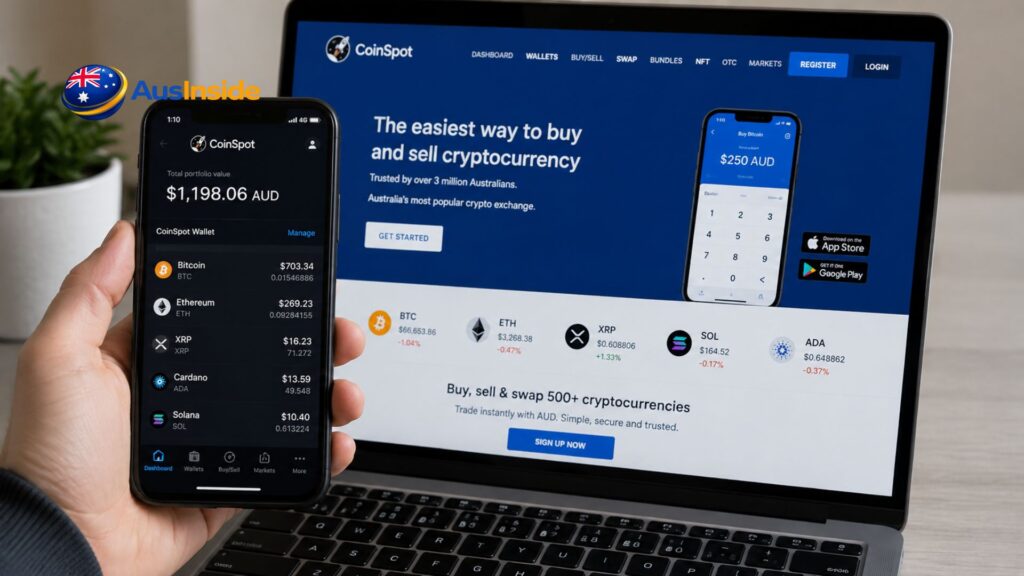
CoinSpot’s Trustpilot score sits around 4 stars from roughly 2,700 reviews, but reading through them reveals a consistent, specific complaint pattern that generic “pros and cons” listicles skip entirely: withdrawal holds triggered by dormant-account re-verification. Multiple recent reviewers describe depositing funds, buying crypto, then being asked to re-submit ID before a withdrawal clears — sometimes with accounts frozen for days while waiting on a callback. CoinSpot representatives respond to most of these publicly, framing it as standard security screening for large or unusual transactions.
Two practical takeaways that don’t show up in most competitor content:
- If your account has been dormant for months and you try to withdraw a large amount, expect a manual verification step, not an instant transfer. Budget a few business days.
- Watch for impersonators. There’s a documented pattern of scam accounts using the “CoinSpot” name on other platforms (including a separate, unrelated Trustpilot listing) to run fake review or trading schemes. Only transact through coinspot.com.au or the official app.
CoinSpot Fees Explained (The Part Most Reviews Get Wrong)
| Order type | Fee | When it applies |
| Instant Buy/Sell | 1% + spread | The default screen most new users land on |
| CoinSwap (coin-to-coin) | 1% per swap | Converting one crypto directly to another |
| Markets (maker/taker) | 0.1% | The order book, under “Markets” in the menu |
| OTC (over-the-counter) | 0.1% | Large trades, minimum thresholds apply |
| PayID / Direct Deposit (OSKO) | Free | Instant, no set limit (bank-imposed limits may apply) |
| POLi / Card deposit | 1.22%–1.88% | Instant but costly |
| Cash deposit (Blueshyft) | ~2.5% | In-store deposits |
| AUD withdrawal | Free | Bank transfer out |
| Crypto withdrawal | Network fee only | Varies by coin and congestion |
Our testing found that a $500 Instant Buy of Bitcoin can cost $15–20 once the spread is included, versus roughly 50 cents for the same trade through Markets. CoinSpot’s own help centre even publishes a page titled “Australia’s Lowest Fees” referring to the Markets rate — it’s genuinely competitive, but it’s not the screen the app opens to.
CoinSpot Earn / Staking: A Warning About Outdated Info
CoinSpot staking annual percentage yield searches will bring you a ton of 2023 articles mentioning APYs up to 45-78% for 20+ tokens. In September 2023, the company suspended its Earn program due to the changes in regulatory approaches to yield-bearing crypto products in Australia, and as of 2026, it hasn’t been brought back yet. If any article you are browsing mentions a particular APY on CoinSpot right now, take it with a grain of salt unless it cites the source from the company’s official website.
Deposit and Withdrawal Limits (Verified Against CoinSpot’s Own FAQ)
Per CoinSpot’s AUD Deposit FAQ:
- New accounts start with a $2,000 AUD rolling deposit limit per 24 hours.
- This automatically rises to $10,000 per 24 hours after your first deposits and a short account history, or sooner with a verification photo.
- Submitting further ID can raise the limit to $100,000 per 24 hours.
- PayID and Direct Deposit (OSKO) carry no CoinSpot-imposed ceiling — your limit there is whatever your own bank allows.
- Each deposit method (PayID, POLi, card, cash) has its own independent 24-hour cap, so combining methods can raise your effective daily total.
How to Sign Up and Verify Your Account
- Create your account with an email address and a strong, unique password.
- Verify your identity with a driver’s licence or passport plus a selfie check — required under AUSTRAC rules before depositing.
- Enable two-factor authentication through an authenticator app rather than SMS.
- Link a funding method — PayID or Direct Deposit, since both are free and uncapped by CoinSpot.
- Deposit AUD — PayID transfers usually clear within minutes during business hours; first-time or large deposits can be held 1–2 business days.
- Raise your limits if needed by submitting a verification photo through the account settings.
How to Buy Crypto on CoinSpot Without the 1% Fee
- Deposit AUD via PayID or Direct Deposit (free, no CoinSpot cap).
- Open the Markets tab — not the home-screen Instant Buy button.
- Search for the coin and select its AUD trading pair.
- Place a limit order slightly below market price, or a market order for instant execution at the 0.1% rate.
- Let the order fill — limit orders can take longer but often land at a better net price than Instant Buy’s spread.
- For long-term holdings, move funds to a self-custody wallet rather than leaving large balances on any exchange. If you want a deeper walkthrough of wallet options and how to structure that move safely, ausinside.com’s guide to storing crypto after purchase covers the self-custody side of this step.
CoinSpot vs Other Australian Exchanges
| Exchange | Standard trading fee | Beginner ease | Coin selection | Best for |
| CoinSpot | 0.1% (Markets) / 1% (Instant) | Very high | 500+ | Beginners, AUD-first users |
| Swyftx | ~0.6% flat | High | 400+ | Balance of ease and cost |
| Independent Reserve | 0.5% or less (volume-based) | Medium | 30+ | Cost-conscious active traders |
| Digital Surge | ~0.5% | High | 300+ | Local support with lower fees |
| Binance Australia | 0.1% | Medium | 350+ | Experienced traders on a global platform |
CoinSpot wins on coin variety, local support, and how fast you can go from signup to first purchase. It loses on default pricing unless you actively route trades through Markets.
Pros and Cons of CoinSpot
Pros
- Largest coin selection of any Australian exchange
- Free, uncapped AUD deposits and withdrawals via PayID/Direct Deposit
- 24/7 Melbourne-based live chat support
- AUSTRAC registered since 2018, ISO 27001 certified, externally audited
- SMSF support with a dedicated team and read-only accountant API access
- 0.1% Markets fee is genuinely competitive once you find it
Cons
- Instant Buy/Sell defaults to a 1%+ fee most users never question
- Order book liquidity is thinner than global exchanges like Binance
- Dormant-account withdrawals can trigger re-verification holds lasting days
- 2023 hot wallet breach ($2.4M) remains part of its security history
- Earn/staking program has been suspended since September 2023, despite outdated articles still quoting APYs
- AFSL covers the Card product, not spot trading — don’t overstate what it protects
CoinSpot and Your Tax Obligations (ATO Basics)
The ATO treats crypto as property, not currency, so most CoinSpot activity falls under capital gains tax rather than income tax, with exceptions for trading businesses or crypto received as payment. Disposal events include:
- Selling crypto for AUD
- Swapping one coin for another through CoinSwap
- Spending crypto via the CoinSpot card
- Gifting crypto to someone else
CoinSpot provides downloadable EOFY statements and transaction exports compatible with common Australian crypto tax software. Pull this history before tax time rather than reconstructing months of trades manually. If you’re comparing exchanges specifically on how clean their tax exports are, ausinside.com’s breakdown of exchange tax-reporting tools covers which formats integrate best with local tax software.
Our Verdict: Who Should Actually Use CoinSpot
CoinSpot is the right call if you want an AUD-native exchange with a genuine compliance track record, the widest coin list in the country, and local support you can reach at 3am. It’s the wrong call if minimising every trading fee matters more than convenience — in that case, learning the Markets tab on CoinSpot itself, or moving to Independent Reserve or Swyftx for regular trading, saves real money across a year of activity. Either way, don’t leave large balances sitting idle and unverified; that’s exactly the scenario tied to the withdrawal-hold complaints in recent reviews.
FAQs
Is CoinSpot regulated in Australia?
Yes. It’s been registered with AUSTRAC as a Virtual Asset Service Provider since 2018, and it holds an AFSL (No. 562554) with a non-cash payments authorisation from ASIC, granted 29 April 2026 — though that licence covers payment products like the Card, not spot trading directly.
What’s the cheapest way to buy crypto on CoinSpot?
Use the Markets tab with a limit or market order (0.1% fee) instead of Instant Buy (1% plus spread).
Does CoinSpot still offer staking or Earn rewards?
No. CoinSpot suspended its Earn program on 1 September 2023 due to regulatory changes, and it hadn’t been reinstated as of 2026. Ignore any article quoting current staking APYs unless it links a live CoinSpot source.
Why is my CoinSpot withdrawal being held?
Large withdrawals, first-time withdrawals, or withdrawals from a dormant account commonly trigger manual identity re-verification. This shows up repeatedly in recent user reviews and can take a few business days to clear.
Is CoinSpot better than Swyftx?
CoinSpot has a larger coin selection and a longer compliance track record; Swyftx often works out cheaper for users who trade regularly and want one consistent fee rate instead of managing two.
How long does CoinSpot verification take?
Initial identity checks usually complete within minutes to a few hours. Limit increases and dormant-account withdrawal re-verification can take longer.