

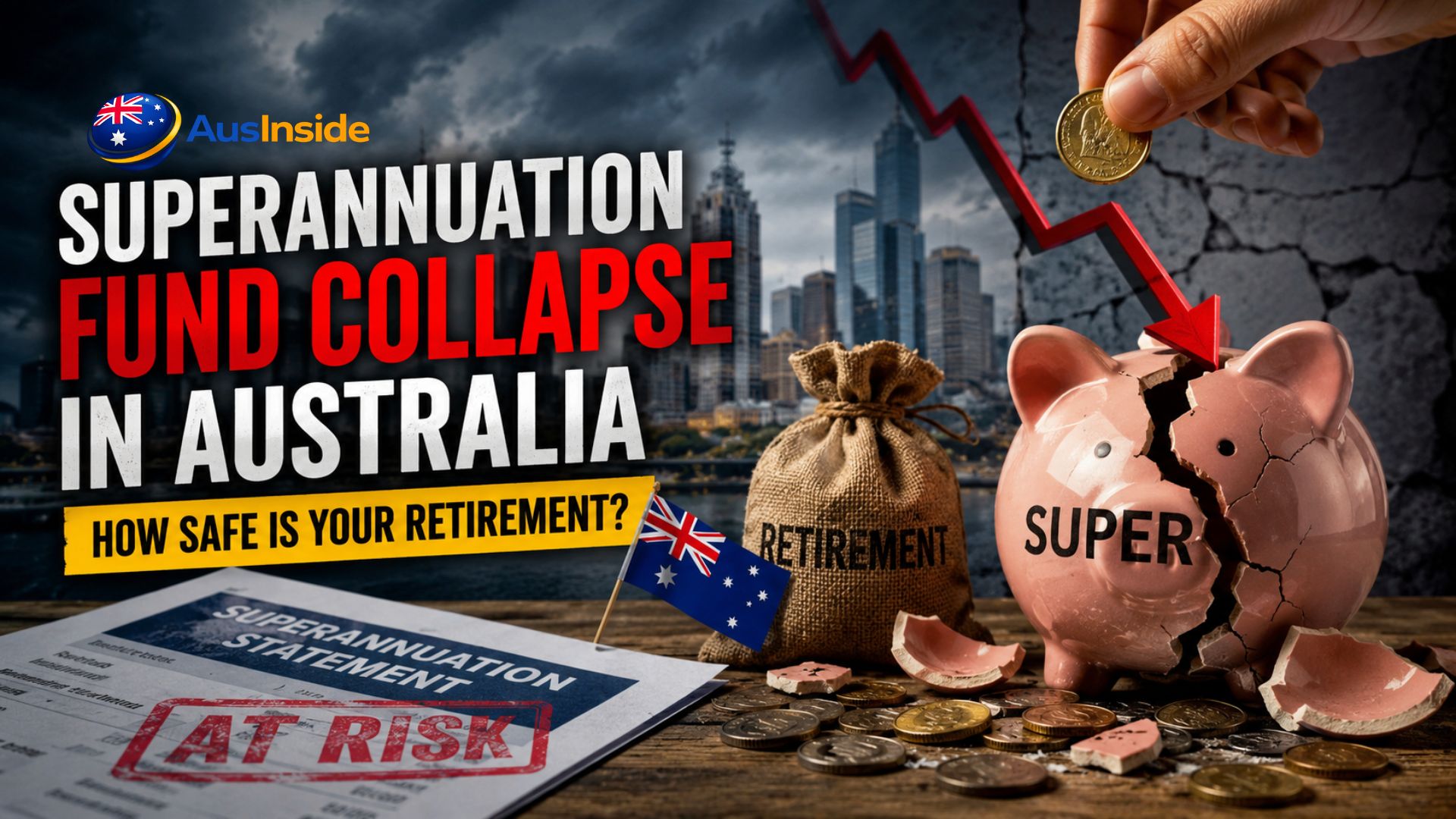
A lot of Australians assume their superannuation is untouchable. Safe. Locked away behind layers of regulation and government oversight until retirement arrives decades later.
Then a financial scandal hits the news.
A fund freezes withdrawals. Regulators investigate misconduct. Markets plunge. A trustee company faces legal trouble. Suddenly people start opening old super statements they have ignored for years and asking a question that feels far more personal than financial:
Could my super fund actually collapse?
That fear is not irrational. Superannuation is not just another investment account. For many Australians, it represents the largest pool of wealth they will ever own outside their family home. Losing even part of it could reshape retirement plans, delay financial freedom, or force major lifestyle changes later in life.
At the same time, headlines often create a distorted picture of how the Australian super system actually works. A “superannuation fund collapse” can mean several completely different things — from poor investment performance to fraud, governance failures, liquidity stress, or regulatory intervention. Some situations sound catastrophic but barely affect members. Others look minor initially but quietly erode retirement balances over years.
That distinction matters more than most people realise.
Australia operates one of the world’s largest retirement savings systems, holding more than $4 trillion in superannuation assets. The industry is heavily regulated by the Australian Prudential Regulation Authority (APRA) and monitored by the Australian Securities and Investments Commission (ASIC). Yet regulation does not eliminate risk. It reduces some risks while leaving others entirely in the hands of members.
Understanding those risks is where most people fall behind.
The real danger is not always dramatic collapse. Sometimes it is years of hidden underperformance, excessive fees, poor governance, or emotional investing decisions quietly damaging your future while nobody notices.
If you want to understand how safe Australian super funds really are, what happens when funds fail, and how to protect your retirement savings intelligently rather than emotionally, you need more than headlines and generic financial advice.
You need the full picture.
Have An Eye On It: AAMI Car Insurance
- Quick Overview: Superannuation Fund Collapse in Australia
- What Does “Superannuation Fund Collapse” Actually Mean?
- Why Australian Superannuation Is Structured Differently From Normal Companies
- Is Superannuation Government Guaranteed in Australia?
- The Hidden Risks Most Australians Ignore
- Industry Funds vs Retail Funds vs SMSFs
- What Happens If Your Super Fund Fails?
- A Lesson the Royal Commission Exposed
- How to Protect Yourself From Superannuation Risk
- The Psychological Side Nobody Talks About Enough
- Key Takeaways
- Final Thoughts
- FAQs
Quick Overview: Superannuation Fund Collapse in Australia
| Key Question | Short Answer |
| Can a super fund collapse? | Yes, but total member losses are rare |
| Is super guaranteed by the government? | No blanket government guarantee exists |
| Who regulates super funds? | APRA and ASIC |
| Can you lose money in super? | Yes, investment losses are always possible |
| Are industry funds safer? | Large industry funds often have stronger scale and oversight |
| Are SMSFs riskier? | Usually yes, because members control decisions themselves |
| Biggest hidden risk | Long-term underperformance and high fees |
What Does “Superannuation Fund Collapse” Actually Mean?
This is where confusion starts.
Most people imagine a super fund collapse as something similar to a bank going bankrupt overnight and everyone losing access to money. That is usually not how superannuation problems unfold in Australia.
A collapse can involve several different scenarios.
Severe Investment Losses
This is the most common situation people mistakenly call a collapse.
Super funds invest across:
- Australian shares
- International equities
- Infrastructure
- Property
- Bonds
- Private markets
- Cash
When markets fall sharply, super balances fall too.
During the Global Financial Crisis, many Australians watched retirement balances drop by 20% or more. Similar panic emerged during the COVID market crash in 2020.
The funds themselves did not necessarily fail. The investments temporarily lost value.
That difference matters.
Superannuation is fundamentally an investment system, not a savings account with guaranteed returns.
Trustee or Governance Failure
This is more serious.
Super funds are run by trustee entities responsible for managing member assets according to strict fiduciary obligations.
Problems can emerge through:
- poor governance
- conflicts of interest
- fraud
- operational failures
- cyber incidents
- compliance breaches
- weak risk management
When governance deteriorates badly enough, regulators may intervene directly.
This has happened multiple times in Australia’s super industry.
Liquidity Crises
Liquidity risk became a major talking point during the pandemic.
Some super funds held large amounts of illiquid assets such as:
- airports
- toll roads
- commercial property
- private equity
- infrastructure projects
Those investments can perform well long term, but they are difficult to sell quickly during crises.
When early super withdrawal schemes were introduced during COVID, some funds faced pressure raising enough liquid cash to meet withdrawals efficiently.
That exposed weaknesses in parts of the industry that many ordinary members had never considered before.
Fraud or Misconduct
This is the scenario people fear most.
One of the most infamous examples in Australian financial history was the collapse of Trio Capital, a superannuation-related fraud scandal that led to major investor losses and regulatory scrutiny.
The case exposed how vulnerable investors could become when transparency, oversight, and due diligence fail simultaneously.
While reforms have strengthened the system since then, the lesson remains relevant:
regulation reduces risk, but it does not eliminate human misconduct.

Why Australian Superannuation Is Structured Differently From Normal Companies
One reason catastrophic member wipeouts remain relatively rare is the legal structure behind superannuation.
Most Australians do not realise their super assets are generally held in trust structures separate from the operating business itself.
That separation changes everything.
If a normal company collapses:
- creditors fight over remaining assets
- shareholders may lose everything
- insolvency administrators take control
Superannuation works differently.
In most APRA-regulated funds:
- member assets are held separately
- trustees manage assets on behalf of members
- custodians often hold investments independently
- strict reporting rules apply
- annual audits are mandatory
This structure creates a protective barrier between operational problems and member ownership.
It does not make super risk-free, but it makes total structural collapse less likely than many people assume.
Is Superannuation Government Guaranteed in Australia?
This is one of the most misunderstood parts of the entire system.
Many Australians incorrectly assume super works like bank deposits under the Financial Claims Scheme.
It does not.
Bank deposits with eligible institutions receive government-backed protection up to certain limits. Superannuation investments generally do not have an equivalent blanket guarantee.
That means:
- market losses remain possible
- poor investment decisions affect balances
- fraud risks still exist
- investment volatility cannot be avoided
This becomes especially important during economic downturns when fear spreads quickly across financial markets.
Some people expect governments to “step in” and fully restore losses. In reality, outcomes depend heavily on the specific circumstances involved.
The Hidden Risks Most Australians Ignore
Interestingly, the biggest threats to retirement savings are often not the dramatic ones dominating headlines.
They are the slow-moving problems people barely notice.
Chronic Underperformance
A fund consistently underperforming benchmarks by even 1–2% annually can destroy enormous amounts of long-term wealth.
Over 30 years, the compounding effect becomes massive.
This is why APRA introduced performance testing reforms under the “Your Future, Your Super” framework. Underperforming funds can now face public scrutiny and pressure to merge.
Many Australians still never compare returns.
That passivity quietly costs people far more than most market crashes ever will.
Excessive Fees
Fees look small on paper.
Over decades, they become brutal.
Investment fees, administration costs, advice charges, insurance premiums, and platform fees can collectively drain hundreds of thousands of dollars from retirement balances over a working lifetime.
The worst part is that members often do not notice because the deductions happen gradually.
Poor Diversification
This is especially dangerous inside SMSFs.
Some self-managed super fund trustees heavily concentrate wealth into:
- a single property
- cryptocurrency
- one business
- private loans
- speculative sectors
That creates concentration risk most professional institutional investors would never accept.
When those bets fail, retirement outcomes can collapse very quickly.

Industry Funds vs Retail Funds vs SMSFs
Not all super structures carry the same strengths or vulnerabilities.
Industry Super Funds
Large industry funds have grown significantly in scale over the past decade.
Strengths often include:
- lower fees
- institutional investment access
- large diversification
- strong governance structures
- member-focused models
Scale matters more than people realise in modern investing.
Large funds can negotiate better asset access, spread operational costs, and build stronger internal risk systems.
Retail Super Funds
Retail funds are generally operated by financial institutions and investment firms.
They often provide:
- broader investment menus
- integrated financial advice
- platform flexibility
- sophisticated portfolio options
But quality varies enormously between providers.
Some retail funds perform exceptionally well. Others suffer from high fees or weaker long-term returns.
Self-Managed Super Funds (SMSFs)
SMSFs appeal to Australians who want control.
That control comes with serious responsibility.
SMSF trustees become responsible for:
- compliance
- investment strategy
- diversification
- auditing
- taxation obligations
- record keeping
A surprising number of SMSF problems stem from overconfidence rather than lack of intelligence.
People often underestimate how emotionally difficult long-term investing becomes during crises.
What Happens If Your Super Fund Fails?
The answer depends entirely on the nature of the failure.
If a Fund Is Forced to Merge
This is increasingly common.
Underperforming or operationally weak funds are often merged into larger funds.
In most cases:
- member balances transfer across
- investments are restructured
- services continue normally
Many members barely notice beyond administrative updates.
If Fraud Occurs
Fraud creates more complicated legal recovery processes.
Authorities may:
- freeze assets
- investigate trustees
- pursue recovery actions
- compensate some losses
- restructure affected investments
Recovery outcomes vary significantly.
Some investors recover substantial amounts. Others do not.
If Markets Crash
This is where emotional mistakes become dangerous.
Many investors panic during downturns and switch entirely into cash after balances have already fallen.
History repeatedly shows this behaviour damages long-term returns.
People often recover poorly from emotional investing decisions compared to temporary market declines themselves.
A Lesson the Royal Commission Exposed
The Royal Commission into Misconduct in the Banking, Superannuation and Financial Services Industry changed public perception of financial institutions in Australia.
One uncomfortable reality emerged clearly:
large institutions were not automatically acting in members’ best interests.
Issues uncovered included:
- inappropriate fee structures
- conflicted advice
- weak accountability
- poor governance practices
For many Australians, this shifted superannuation from a “set and forget” system into something requiring active oversight.
That mindset shift was probably healthy.
Blind trust is rarely a sound financial strategy.
How to Protect Yourself From Superannuation Risk
You do not need to become a financial analyst to improve your retirement security.
But you do need awareness.
Compare Long-Term Performance
Do not obsess over one-year returns.
Look at:
- 7-year performance
- 10-year performance
- fee-adjusted returns
- volatility consistency
Long-term discipline matters more than short-term excitement.
Review Your Investment Option
Many people remain in default options for decades without understanding:
- risk exposure
- asset allocation
- defensive positioning
- growth weighting
That becomes dangerous near retirement age.
Watch Fees Carefully
Small percentages compound aggressively over time.
Even a 1% fee difference can materially affect retirement outcomes across several decades.
Keep Beneficiaries Updated
Family disputes around super payouts happen more often than people expect.
Marriage, divorce, children, and estate planning changes should trigger immediate reviews.
Take Cybersecurity Seriously
Super accounts are increasingly targeted by scammers.
Use:
- strong passwords
- multi-factor authentication
- phishing awareness
- regular account monitoring
Cybersecurity is now part of retirement planning whether people like it or not.

The Psychological Side Nobody Talks About Enough
The greatest superannuation risk for many Australians is not collapse.
It is disengagement.
People ignore super for decades because retirement feels distant. Then fear suddenly takes over during crises, leading to rushed emotional decisions.
That cycle destroys wealth.
The investors who usually perform best are not necessarily the smartest. They are often the most disciplined emotionally.
They:
- avoid panic selling
- ignore sensational headlines
- review strategy consistently
- think long term
- understand volatility is normal
That mindset matters enormously.
Key Takeaways
- Superannuation fund collapse in Australia is possible, but total member wipeouts remain uncommon.
- Super assets are generally protected through trust structures separate from operating companies.
- There is no blanket government guarantee protecting all super balances.
- Market downturns can reduce balances significantly even when funds remain operationally stable.
- Long-term underperformance and excessive fees often cause more damage than dramatic collapses.
- SMSFs provide flexibility but increase personal responsibility and investment risk.
- Emotional reactions during financial crises frequently hurt retirement outcomes more than volatility itself.
Don’t Forget To Read It: Neutral Bay
Final Thoughts
The Australian superannuation system is far stronger than alarmist headlines sometimes suggest. But it is also more complex — and less guaranteed — than many people assume.
That balance is important.
You should not live in fear that your super fund will suddenly disappear tomorrow. Yet blind complacency is risky too. Retirement systems work best when members stay informed, ask difficult questions, and understand where risks genuinely exist.
Most Australians spend more time researching smartphones, holidays, or streaming subscriptions than reviewing the investment structure that may ultimately fund thirty years of retirement.
That disconnect is dangerous.
The people who usually protect their retirement wealth best are not constantly chasing the highest returns. They are the ones paying attention consistently while everyone else treats super as background noise.
FAQs
Can superannuation funds go bankrupt in Australia?
Yes, operational failures and insolvency scenarios can occur, but super assets are generally held separately in trust structures, which reduces the risk of total member losses.
Is Australian superannuation safe?
Australia has one of the world’s most heavily regulated super systems, but safety depends on investment performance, governance quality, diversification, and member decisions.
What happens if my super fund underperforms?
Persistent underperformance can significantly reduce retirement balances over time. APRA now publicly identifies some underperforming funds under performance testing reforms.
Are industry super funds safer than SMSFs?
Generally, large industry funds have stronger institutional oversight and diversification. SMSFs place responsibility directly on trustees, increasing personal risk exposure.
Can market crashes wipe out my super balance?
Large declines are possible during severe downturns, but diversified portfolios historically recover over long periods. Panic selling during crashes often causes greater permanent damage.
How often should I check my super account?
At minimum, conduct a detailed review annually and reassess after major life events, regulatory changes, or market disruptions.