
NRMA Insurance is a financially strong, widely recognised insurer backed by IAG — Australia’s largest general insurer — but it’s rarely the cheapest quote on the market, and claims-handling delays are its most persistent complaint. If you want a household name with a genuine national claims team and don’t mind paying above-average premiums, shortlist it. If price is your only filter, get quotes from Budget Direct, AAMI, or Bingle alongside NRMA before you sign anything.
We pulled data from NRMA’s own Product Disclosure Statements and Premium, Excess and Discounts Guides, cross-checked satisfaction claims against CHOICE‘s member survey, Canstar‘s 2026 Star Ratings, ProductReview.com.au, and the Australian Financial Complaints Authority’s (AFCA) most recent dispute data. Here’s what actually holds up.
- Who NRMA Actually Suits (And Who Should Compare Elsewhere)
- Who Owns NRMA Insurance (And Why Its Financial Strength Matters)
- Car Insurance Tiers Compared
- What Comprehensive Plus Actually Covers
- Home Insurance: What's Actually Different From Competitors
- Discounts: How They Actually Work (Not Marketing Copy)
- How NRMA Compares on Independent Ratings
- How NRMA Stacks Up on Complaints Data
- How to Make an NRMA Claim
- NRMA Pros and Cons
- NRMA vs. Budget Direct, AAMI, Allianz, and RACQ
- How to Get NRMA's Best Price
- Complaints We Keep Seeing And How to Avoid Them
- FAQs
- Our Final Call
Who NRMA Actually Suits (And Who Should Compare Elsewhere)
NRMA works best for:
- Drivers and homeowners in NSW, ACT, QLD, WA, SA, NT, and Tasmania. NRMA doesn’t sell direct in Victoria — Victorian drivers use RACV instead, through a joint underwriting arrangement with IAG.
- Anyone who wants a repairer they trust, rather than being locked into an insurer-appointed panel. Choice of repairer is available on car policies, though it may cost extra depending on the tier.
- Former CGU direct customers. CGU exited the direct-to-consumer market in June 2025, and those customers were transitioned to NRMA or RACV — worth knowing if a CGU policy of yours changed brand without much explanation.
- Home owners who want flood cover as standard, not an optional extra. NRMA’s home policies include flood, storm, and storm surge cover by default in most states.
NRMA isn’t the strongest fit for:
- Budget-first shoppers. NRMA didn’t feature among Canstar’s 2026 National or State Outstanding Value Car Insurance Award winners — those went to AAMI, Bingle, and ROLLiN’ Insurance, with Budget Direct named 2026 Insurer of the Year for a fifth consecutive year.
- Victorian drivers, who need RACV.
- Anyone who’s claims-averse to call wait times. Recurring reviews cite long hold times and being asked to repeat information across multiple calls.
Who Owns NRMA Insurance (And Why Its Financial Strength Matters)
NRMA Insurance is underwritten by Insurance Australia Limited, trading as NRMA Insurance, a subsidiary of Insurance Australia Group (IAG) — Australia and New Zealand’s largest general insurer. IAG’s core operating subsidiaries carry a Standard & Poor’s ‘AA-‘ Insurer Financial Strength Rating, which S&P classifies as “very strong” claims-paying ability. In practical terms, this means NRMA is financially positioned to pay large-scale claims even after a major event like a hailstorm or flood.
Two recent developments worth knowing if you’re comparing insurers in the same corporate family:
- IAG completed its acquisition of RACQ’s insurance underwriting business (RACQI) in September 2025. RACQ remains a distinct brand for Queensland members, but its underwriting is now part of the same group as NRMA’s.
- IAG established the NRMA Insurance Help Fund in November 2025, a multimillion-dollar initiative aimed at supporting climate resilience for Australian communities — relevant if you’re weighing an insurer’s response to increasingly frequent extreme weather events.
Car Insurance Tiers Compared
NRMA runs five main car insurance tiers.
| Tier | Choice of Repairer | Hire Car After Accident | New Car Replacement | Notes |
| Third Party Property | No | No | No | Covers damage to others’ property only |
| Third Party Fire & Theft | No | No | No | Adds fire and theft cover for your own car |
| Comprehensive Basic | No | No | No | Entry-level full cover |
| Comprehensive | Optional extra | Fault-dependent | No | Mid-tier, customisable |
| Comprehensive Plus | Optional extra | Yes, regardless of fault | Yes, if written off in first 3 years | Highest cover ceiling |
A key detail Forbes Advisor’s review flags and we’ve confirmed against the PDS: choice of repairer is not automatically included even on Comprehensive Plus — it’s an optional extra you need to add at quote time, on every tier.
What Comprehensive Plus Actually Covers
Based on NRMA’s Car Insurance Premium, Excess and Discounts Guide and product pages, Comprehensive Plus includes:
- Accident, storm, fire, and theft damage to your own vehicle.
- Third-party property damage cover up to $20 million.
- Emergency repairs so the car is safe to drive (limits apply — check your Certificate of Insurance, as figures vary by policy version).
- Stolen or damaged baby capsules, up to $500.
- Stolen personal items from the car, up to $1,000.
- Stolen work tools, up to $1,500.
- No excess on glass-only claims.
- Taxi or transport costs after an accident if your car can’t be driven or is stolen.
- Occasional rideshare driving cover (Uber, Didi) if you nominate this on your policy.
What it doesn’t cover: running costs on a hire car (fuel, tolls, e-tags), and injury to yourself or others, which is handled through your state’s Compulsory Third Party (CTP) scheme — a legal requirement separate from any NRMA policy.
Home Insurance: What’s Actually Different From Competitors
NRMA’s home cover is worth a closer look because of how it treats flood risk, which trips up a lot of buyers switching insurers.
- Flood, storm, and storm surge are included by default on Home Buildings, Home Contents, and combined policies — not sold as a bolt-on the way some insurers structure it.
- In NSW, ACT, and Tasmania, you may be offered the choice to remove flood, rainwater run-off, and storm surge cover together as one bundle — you can’t opt out of just one and keep the others.
- In Queensland, flood cover is mandatory and can’t be removed.
- Temporary accommodation is covered for up to 12 months on Standard Buildings and Contents policies, extending to 24 months on the Plus tier.
- Home Buildings and Contents Plus adds a 25% “safety net” on top of your building sum insured if a full rebuild costs more than expected — a meaningful protection against underinsurance, which is a common and costly mistake.
- Combining Buildings and Contents into one policy means you generally pay only one excess (the higher of the two) if both are damaged in the same event.
NRMA has also picked up Roy Morgan’s Australia’s Most Trusted Insurance Brand award for four consecutive years (2022–2025) — a brand-trust metric that sits in some tension with its lower satisfaction scores on independent review platforms, discussed below.
Discounts: How They Actually Work (Not Marketing Copy)
NRMA replaced its old “Loyalty Discount” with a Relationship Discount from 20 April 2024, calculated on two factors: how many consecutive years you’ve held a policy, and how many eligible products you hold. A Multi-Product Discount applies separately when you hold two or more eligible products.
A few things the official Premium, Excess and Discounts Guide spells out that marketing pages tend to skip:
- Discounts are applied one at a time to an already-discounted premium — they don’t stack additively.
- Discounts are capped by a minimum premium. Once you hit that floor, further loyalty or bundling won’t reduce your price any further, no matter how long you’ve been a customer.
- A new discount you qualify for mid-term generally doesn’t apply until your next renewal, not immediately.
- Buying and paying for your policy online can get you up to 10% off your first year’s premium — this doesn’t apply if you quote by phone and only pay online afterward.
- Roadside assistance and My NRMA membership can count toward your Relationship Discount calculation, but only under specific conditions tied to how long you’ve held them.
If you’re a long-term customer wondering why your renewal doesn’t reflect decades of loyalty the way it once did, this restructure explains it — worth calling 132 132 to ask exactly which discounts are currently applied to your policy.
How NRMA Compares on Independent Ratings
We looked at four separate, independently run measures rather than relying on NRMA’s own marketing claims.
| Source | What It Measures | Result |
| ProductReview.com.au | Aggregated customer reviews (car insurance) | 1.6 out of 5 stars from 1,757 reviews |
| CHOICE 2025 member survey | Customer-reported experience, 1,800 policyholders surveyed | 72% rated overall experience above average or excellent; 78% of claimants rated the claims process above average or excellent |
| Canstar 2026 Car Insurance Awards | Expert-assessed value across 42 consumer profiles | NRMA did not win a National or State Outstanding Value Award; AAMI, Bingle and ROLLiN’ Insurance did |
| Roy Morgan Most Trusted Brand Awards | Consumer brand trust | NRMA named Australia’s Most Trusted Insurance Brand, 2022–2025 |
The gap between the ProductReview score and the CHOICE survey isn’t a contradiction — it reflects who bothers to leave a review. People mid-dispute over a delayed claim are far more likely to post publicly than a satisfied long-term customer renewing quietly. Weigh both rather than picking whichever number supports the decision you’d already made.
How NRMA Stacks Up on Complaints Data
This is the part most reviews skip, and it’s the most useful for judging real-world claims experience. AFCA — the free, government-backed dispute resolution scheme all licensed Australian insurers must belong to — publishes yearly complaint volumes by insurer.
| Insurer | AFCA Disputes Lodged (Most Recent Reporting Year) |
| Suncorp | 5,343 |
| IAG (NRMA’s underwriter) | 3,444 |
| Allianz | 1,625 |
| QBE | 1,588 |
| RACQ | 1,075 |
IAG’s 3,444 disputes place it second-highest by volume, though it’s also worth noting IAG is one of the largest insurers by policy count, so higher absolute numbers partly reflect scale rather than a proportionally worse experience. Industry-wide, general insurance complaints to AFCA rose 17% to 34,231 in the most recent financial year, and comprehensive motor vehicle insurance remained the single most complained-about product nationally, driven mainly by claim delays tied to parts shortages and repairer capacity — an industry-wide issue, not one unique to NRMA.
How to Make an NRMA Claim
- Report the incident as soon as possible. Use the NRMA app, the online claims portal, or call the claims line — the number on your Certificate of Insurance is the most reliable, as claims lines can change.
- Gather evidence before you call. Photos of the damage, the other driver’s registration and contact details, and your policy number all speed up intake.
- Lodge a police report if required — for theft, hit-and-run, or any incident involving injury — through your state’s official police portal, not through NRMA.
- Choose your repairer if you added that option, otherwise you’ll be assigned one from NRMA’s network.
- Track your claim through your online account rather than relying on repeat phone calls, which reviewers consistently flag as slow.
- Put any delay in writing and ask for a formal complaint reference if you pass two weeks without a substantive update.
- Escalate to AFCA if NRMA’s internal dispute resolution doesn’t resolve things. AFCA is free, independent, and every insurer NRMA competes with is required to participate in it the same way.
NRMA Pros and Cons
| Pros | Cons |
| Backed by IAG’s ‘AA-‘ S&P financial strength rating | Not a Canstar 2026 Outstanding Value Award winner |
| Flood, storm and storm surge included by default on home cover | Choice of repairer costs extra on every car insurance tier |
| $20 million third-party property liability cover | Second-highest AFCA dispute volume among major insurers (reflecting scale, but still a factor) |
| Roy Morgan’s Most Trusted Insurance Brand, 2022–2025 | 1.6-star average on ProductReview from 1,757 reviews |
| Relationship and multi-product discounts for bundling | Discounts are capped by a minimum premium and don’t stack additively |
| Choice of accommodation length up to 24 months (Home Plus) | Not available to Victorian drivers |
NRMA vs. Budget Direct, AAMI, Allianz, and RACQ
| Insurer | Best For | 2026 Canstar Standing | Notable Trade-off |
| NRMA | Brand trust, large claims infrastructure | Not an Outstanding Value winner | Higher premiums, extra cost for repairer choice |
| Budget Direct | Lowest headline price | Insurer of the Year (5th year running) | Fewer bundled extras at entry tier |
| AAMI | Balanced pricing and features | National Outstanding Value Award winner | Roadside assistance is an optional extra |
| Allianz | Insurer-managed repairs, competitive pricing | Not listed among 2026 award winners | Less control over which repairer does the work |
| RACQ | Queensland members wanting local support | Now underwritten by IAG via the RACQI acquisition | Limited relevance outside QLD |
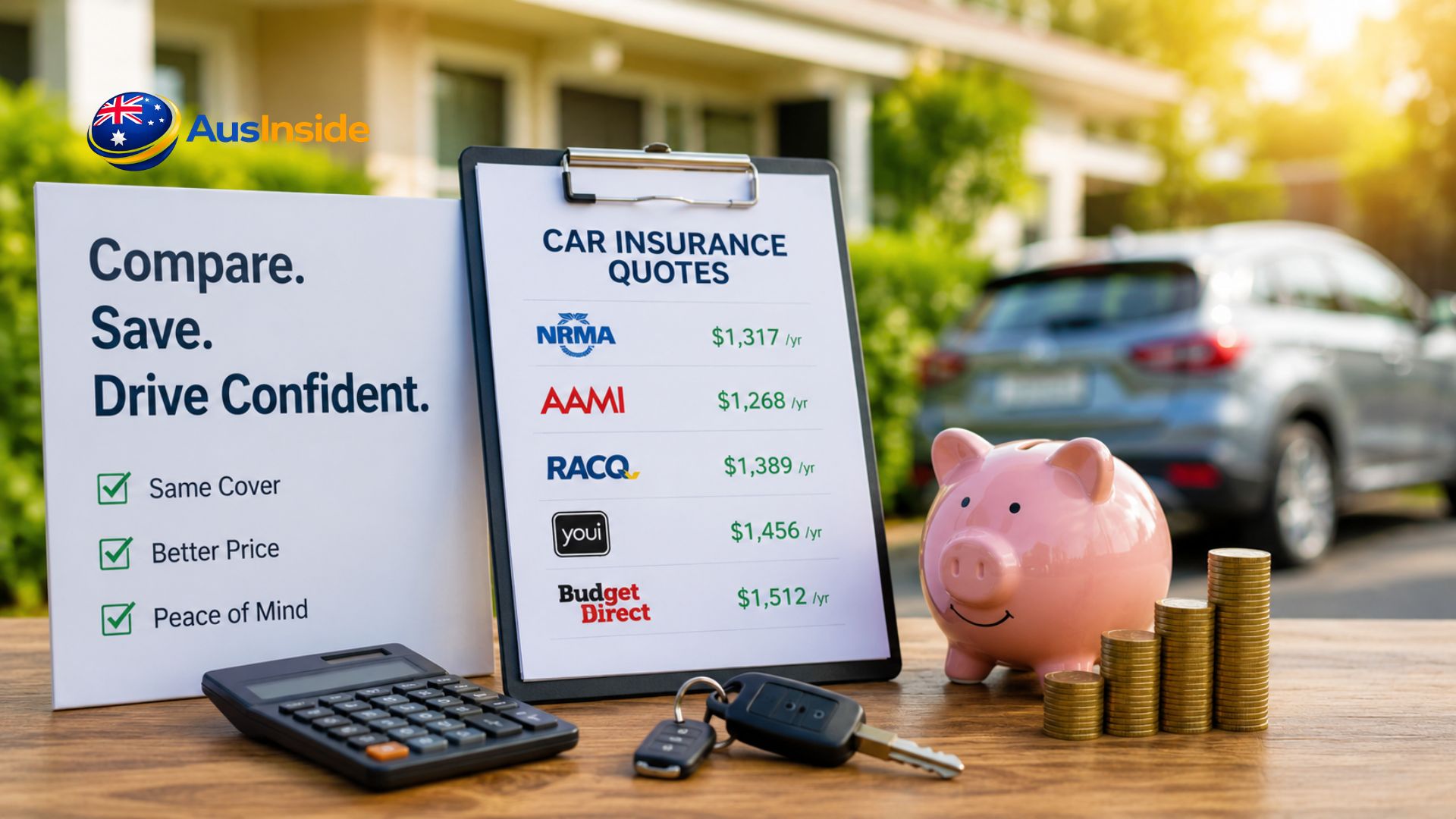
If price is your only filter, get quotes from Budget Direct and AAMI alongside NRMA before renewing. If claims infrastructure and financial strength matter more than shaving a few hundred dollars off your annual premium, NRMA holds up on that front.
How to Get NRMA’s Best Price
- Bundle car with home and contents to trigger the Multi-Product Discount — but confirm the exact percentage in your Premium, Excess and Discounts Guide, since it varies by product mix.
- Buy and pay for your policy online to capture the up-to-10% first-year discount, rather than quoting by phone.
- Increase your voluntary excess if you can absorb the cost in a claim — this reliably lowers the premium.
- Confirm your garaging address is current. NRMA prices by postcode risk, and an outdated address can inflate your quote unnecessarily.
- Requote at every renewal. Reviewers consistently report new customers get sharper pricing than long-term renewers, and the Relationship Discount has a minimum-premium ceiling that limits how much loyalty alone will save you.
- Ask specifically which discounts are currently applied when you call 132 132 — the guide notes updates can take up to 72 hours to reflect and errors do occur.
Complaints We Keep Seeing And How to Avoid Them
- “My claim took weeks to be assessed.” This tracks with the broader AFCA finding that claim delays, driven by parts and repairer shortages, are the single biggest issue across the entire general insurance industry — not unique to NRMA, but still worth planning around. Ask for a written timeline at first contact.
- “I was auto-renewed on a car I no longer own.” Cancel directly with NRMA when you sell a vehicle — don’t assume the policy lapses on its own.
- “Discounts I expected weren’t applied.” Given how the Relationship and Multi-Product Discounts stack (one at a time, capped by a minimum premium), request an itemised breakdown rather than assuming a headline percentage applies in full.
- “Long hold times on the phone.” Managing a claim through the online portal or app, rather than by phone, generally moves faster based on recurring reviewer feedback.
FAQs
Is NRMA insurance good value in Australia?
It offers strong financial backing and broad cover, but it wasn’t a Canstar 2026 Outstanding Value Award winner. Compare it against Budget Direct and AAMI before renewing if price matters most to you.
Does NRMA cover Victoria?
No. Victorian drivers use RACV, which shares an underwriting arrangement with IAG, NRMA’s parent company.
Is NRMA financially secure enough to pay large claims?
Yes. IAG’s core operating subsidiaries, including NRMA’s underwriter, carry a Standard & Poor’s ‘AA-‘ Insurer Financial Strength Rating — classified as “very strong.”
What happens if I’m unhappy with how NRMA handled my claim?
Lodge a formal complaint with NRMA first. If it isn’t resolved, escalate to the Australian Financial Complaints Authority (AFCA) at no cost — a step available regardless of which insurer you use.
Is flood cover included in NRMA home insurance?
Yes, by default in most states. In NSW, ACT, and Tasmania you can choose to remove flood, rainwater run-off, and storm surge together; in Queensland, flood cover is mandatory.
Our Final Call
NRMA’s strength is financial backing and brand trust, not headline price. Its ‘AA-‘ S&P rating and its position inside Australia’s largest general insurer make it a safe bet for paying out on large or unusual claims. But independent data, Canstar’s 2026 awards, ProductReview’s aggregate score, and AFCA’s dispute volumes all point the same direction: you’ll likely pay more than you would elsewhere, and claims speed is a live concern industry-wide, not just for NRMA. Get a comparative quote from Budget Direct or AAMI before you commit, and read your PDS carefully for the exact dollar limits on your policy, since these can shift between product versions.