
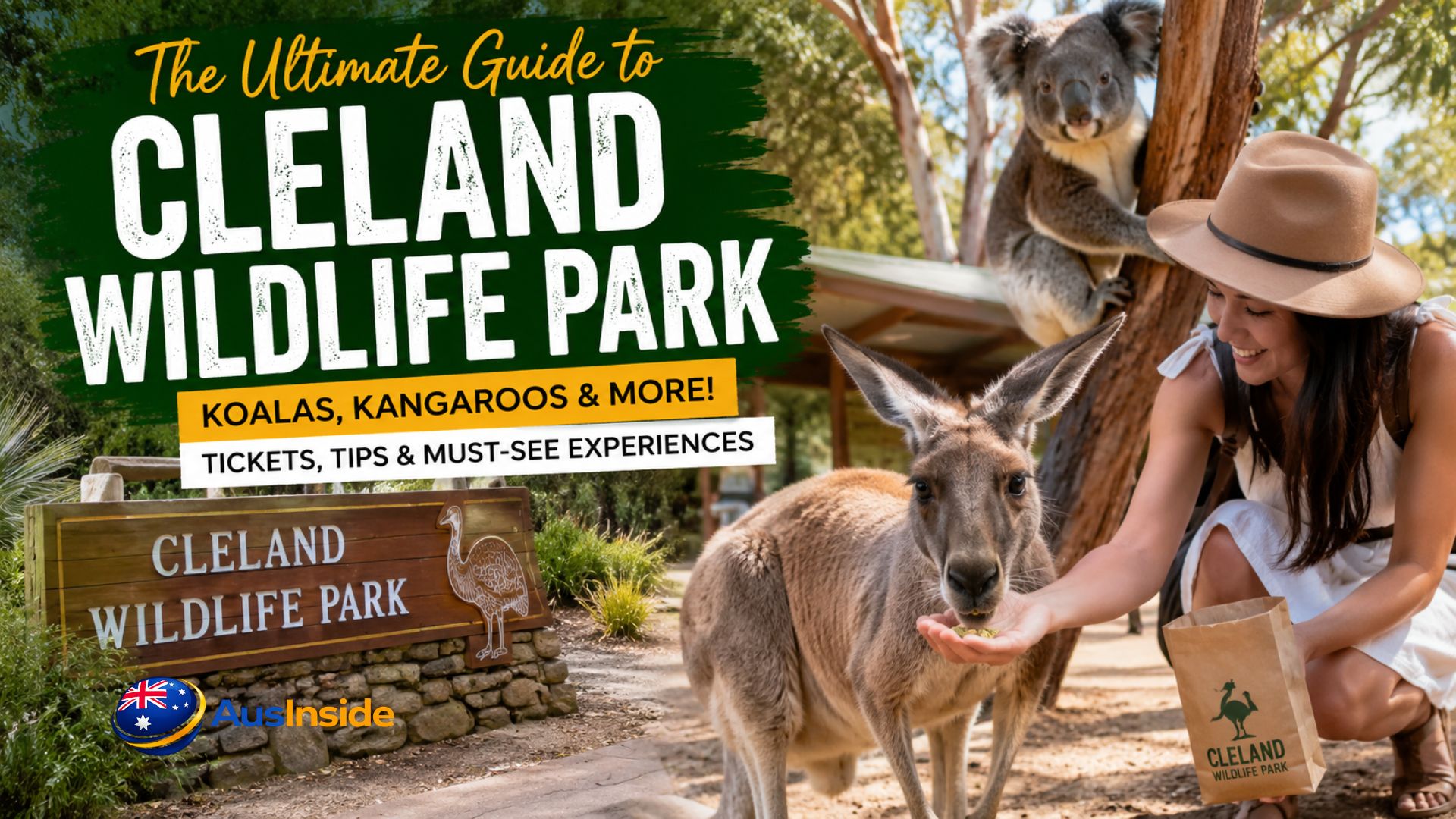
There’s a moment that happens to almost every first-time visitor at Cleland Wildlife Park. You walk through the gate, still adjusting to the smell of eucalyptus and bush air, and a western grey kangaroo just… walks toward you. Not because it’s trained to. Not because a handler is guiding it. Because it noticed the bag of animal food in your hand and made a decision. That moment, that casual confidence of a wild animal choosing to approach you, is something you can’t manufacture at a regular zoo.
Cleland Wildlife Park sits in the Adelaide Hills, about 20 minutes and a world away from Adelaide’s CBD. Sprawling across 35 hectares of natural stringybark bushland, it draws roughly 100,000 visitors a year and holds a permanent spot in the South Australian Tourism Hall of Fame. But the awards aren’t really the point. What makes this place worth your time is simpler: you get genuine access to over 130 species of native Australian wildlife, and most of them are roaming free around you.
This guide covers everything, including the things most visitor articles forget to mention.
Have A Look On It: Tallaringa Conservation Park
- Quick Overview
- What Makes Cleland Different from a Zoo
- Getting There
- Animals You'll Actually Encounter
- The Koala Situation: What's Free and What Costs Extra
- Paid Experiences Worth Considering
- Keeper Talks: Plan Around These
- The Night Walk: A Completely Different Park
- Things Most Visitor Don't Know
- The Kaurna and Peramangk Connection
- Practical Information
- Combining With Mount Lofty Summit
- Common Mistakes to Avoid
- Key Takeaways
- FAQs
Quick Overview
| Address | 365 Mount Lofty Summit Road, Crafers SA 5152 |
| Hours | 9:30 AM to 5:00 PM daily (last entry 4:30 PM) |
| Closed | Christmas Day and catastrophic fire danger days |
| Distance from Adelaide | 20 minutes by car / 22 km |
| Park Size | 35 hectares of natural bushland |
| Species Count | 130+ native Australian species |
| Phone | +61 8 8339 2444 |
| Parking | Free on-site |
| Best Duration | 3 to 4 hours |
| Café | Yes, Barking Gecko Café, open park hours |
What Makes Cleland Different from a Zoo
Most wildlife attractions fit one of two moulds. Either you’re watching animals pace behind glass, or you’re in a national park hoping to spot something in the distance. Cleland is genuinely neither.
The park operates on an open-range model: most animals live in large natural paddocks, not cages, and many roam the walking trails completely freely. You’re not observing wildlife from behind a barrier. You’re walking through habitat that the animals actually share with you.
That’s a meaningful difference in experience. When kangaroos approach you for food, it’s because they’ve made a choice. When a wombat shuffles past your boots without so much as a glance, it’s because you’re in its space and it’s simply going about its day. The interactions feel honest.
The park was officially opened in 1967, established as part of what was then Cleland Conservation Park and named after Sir John Burton Cleland, a prominent Australian naturalist and microbiologist. In November 2021, the surrounding conservation park was upgraded to Cleland National Park status by merging with the adjacent Eurilla Conservation Park. The wildlife park itself operates separately within the national park boundary due to its high visitor volume and hands-on nature.
Getting There
By Car
Easiest option. Take the South Eastern Freeway to the Crafers exit, then follow Summit Road to the Cleland turn-off. Free parking is available on-site. The road up is narrow and winding in sections, so drive carefully, especially if it’s your first time.
By Public Transport
Possible but not quick. Catch bus 864F or T840 from Currie Street in the city to Crafers, then swap to the 823 bus up to the park. Allow about an hour total. Worth noting: there are only around three buses per day on the upper route, and the last bus back from the wildlife park departs around 4:30 PM. Miss it and you’re calling an Uber.
By Tour
Guided day tours from Adelaide typically include return transport, park entry, a bag of animal food, park orientation, and often a stop at Mount Lofty Summit. Prices start from around AUD $124 per adult and $90 per child. For international visitors without a car, this removes every logistical headache.
By Rideshare
A one-way Uber from central Adelaide runs around $35, taxis closer to $40-50. Fine for groups splitting the cost, or if you want flexibility on your return time.
Google Map Location
Animals You’ll Actually Encounter
The full species list runs past 130, but here’s what you’re realistically going to see, interact with, and remember.
Marsupials: The Star Attractions
| Species | Where | Can You Feed/Pat? |
| Red Kangaroos | Open paddock | Yes, with food bag |
| Western Grey Kangaroos | Open paddock | Yes, with food bag |
| Kangaroo Island Kangaroos | Open area | Yes |
| Swamp Wallabies | Roaming trails | Yes |
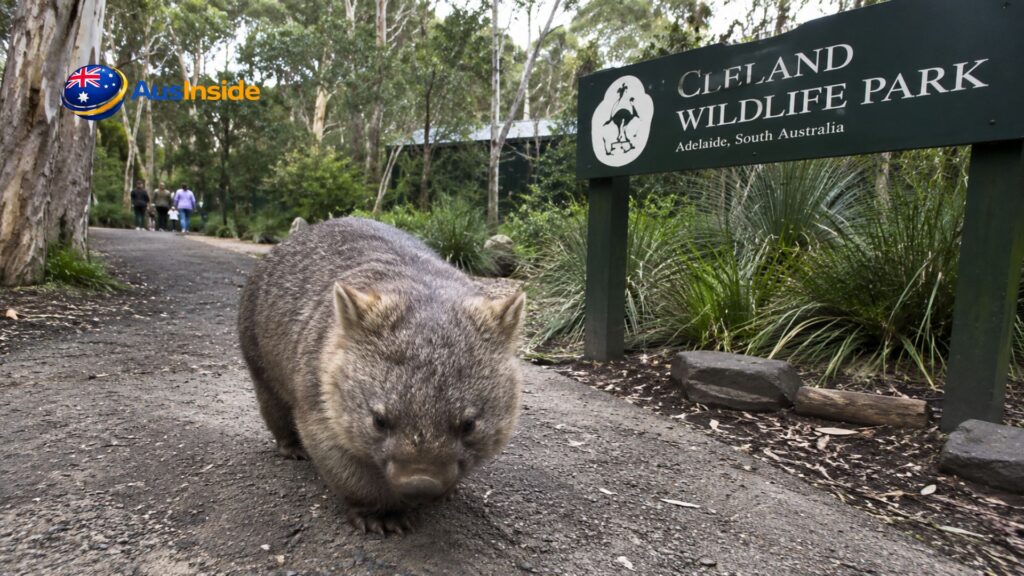
| Wombats | Various enclosures | Viewing; occasional pat |
| Koalas | Koala Loft and encounters | Touch in experience only |
| Short-beaked Echidnas | Enclosed area | Viewing |
| Bettongs and Potoroos | Open range | Yes, with food bag |
Kangaroos are genuinely the easiest win here. Grab the bag of animal food at the entry counter (around $3), and within minutes you’ll have a mob pressing against your hands. They’re not performing, they’re just hungry. The potoroos are smaller and faster but equally charming once they decide to trust you.
The Ones Most Visitors Don’t Expect
Tasmanian Devils: Cleland has them, and they’re one of the highlights many visitors stumble on rather than plan for. Keeper feeding talks for the Tasmanian devils are among the most engaging sessions in the park. These animals are endangered in the wild, and seeing them close up shifts how you think about them. They’re not menacing. They’re oddly fascinating.
Yellow-footed Rock-wallabies: They have their own dedicated enclosure with one of the best elevated views of Adelaide in the park. Most visitors walk straight past because they’re focused on the kangaroos. Don’t.
Dingoes: The dingo enclosure gets quieter keeper talks than the more charismatic animals, but they’re worth watching carefully. Dingoes are nothing like domestic dogs in their movement and expression.
Birds
- Forest aviary and swamp aviary are mapped sections of the park
- Australian pelicans in the wetlands, genuinely enormous up close
- Cape Barren Geese wandering freely in several zones
- Cockatoos in the Robin’s Loft area
- Bush stone-curlews: odd-looking, memorable
Reptiles
Most reptile interaction happens through a paid experience (more below), but the Ocean to Outback Interpretive Centre houses display reptiles, small mammals, and nocturnal species in ambient conditions that make them easier to observe than out in the open midday heat.
The Koala Situation: What’s Free and What Costs Extra
This is the part that confuses people most, so let’s be specific.
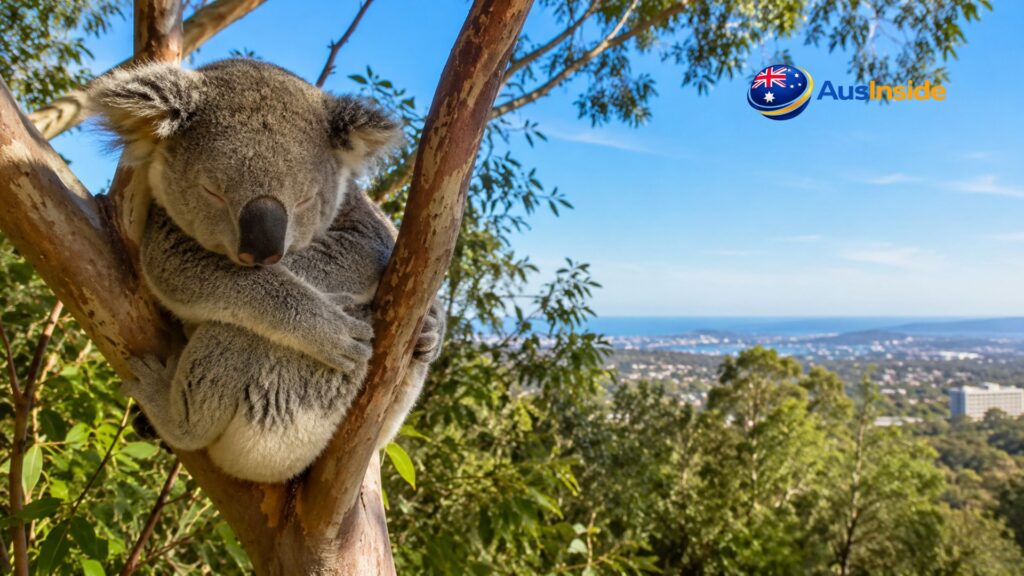
Free with entry: You can get up close to a koala, photograph it, and touch it while a keeper holds it. This is the standard “koala close-up” experience included in your ticket. Lines build up during peak times, so arriving earlier in the day is worth it.
The new Koala Loft: Cleland’s recently opened Koala Loft is an elevated viewing area purpose-built for observing koalas in their natural resting positions. It supplements the hands-on encounter and gives you a different physical vantage point.
Paid upgrade – Meet a Koala: One-on-one time with a koala and its specific keeper. You learn about that individual koala’s history and the park’s role in koala conservation. More intimate, more informative.
Paid upgrade – Behind the Scenes Koala Experience: You actually enter one of the koala enclosures. This is the deepest level of access on offer.
The hold: Holding a koala (as opposed to touching one while the keeper holds it) is available for an additional fee from around AUD $35, must be pre-booked directly through the park, and spots are genuinely limited. This is the one that sells out. If it matters to you, book before you leave home.
One critical detail almost nobody mentions in advance: koala experiences are cancelled when temperatures at Mount Barker are forecast to exceed 32°C. No exceptions, no substitutions, and tour operators typically won’t refund. Check the forecast before you commit to a day.
You May Love It: Kati Thanda-Lake Eyre National Park
Paid Experiences Worth Considering
| Experience | Best For |
| Koala Hold | Anyone who wants the full physical encounter |
| Meet a Koala | Families, wildlife enthusiasts wanting depth |
| Behind the Scenes Koala | True animal lovers, conservation-minded visitors |
| Reptile Encounter | Those fascinated by snakes and lizards |
| Butterfly Tour | Unique to SA; runs Tue-Fri only |
| Night Walk (Public) | Anyone curious about nocturnal wildlife |
| Night Walk (Private) | Couples, small groups wanting a tailored experience |
| Indulgence Night Walk | Premium version, more immersive |
| Breakfast with the Birds | Early risers; bird species talks at feed time |
| Dingo Walk | Walk alongside a dingo with a keeper |
The butterfly tour is specifically worth flagging because almost no competitor article mentions it: Cleland houses South Australia’s only butterfly enclosure. Guided tours run Tuesday through Friday. If you’re visiting midweek, this is an easy addition that surprises people.
Cleland Wildlife Park Ticket Prices
| Ticket Type | Price (AUD) |
|---|---|
| Adult | $34.50 |
| Concession | $27.60 |
| Child (4–15 years) | $19.00 |
| Family (2 Adults + 2 Children) | $89.00 |
| Child (Under 4) | Free |
| Adult Group (10+ people) | $29.50 per person |
| Child Group (10+ people) | $16.00 per child |
Prices are subject to change. Check the official website before your visit.
Guided Tour Prices
| Guided Experience | Price (AUD) |
| Guided Day Tour (Weekdays) | $180 per guide/hour + park entry |
| Guided Day Tour (Weekends) | $360 per guide/hour + park entry |
| Guided Day Tour (Public Holidays) | $540 per guide/hour + park entry |
| Meet a Koala (15 mins) | $36 per person + park entry |
| Hold a Koala (30 mins) | $86.50 per person + park entry |
Note: Guided tours and animal experiences require advance booking, and park entry tickets are not included in the guided experience prices. Prices may change annually.
Keeper Talks: Plan Around These
The keeper talks are free, happen throughout the day, and are where most of the genuinely interesting information surfaces. Things like which individual animals have rehabilitation backstories, how species behave differently across seasons, what the park is actually doing in its breeding programs.
A solid afternoon schedule:
- 2:30 PM: Dingo keeper talk
- 3:15 PM: Lace monitor talk (summer months only)
- 3:30 PM: Koala keeper talk
Pick up the day’s schedule at the entry gate or ask staff when you arrive. The talks are close enough together that you don’t need to rush between them.
The Night Walk: A Completely Different Park
This doesn’t get enough attention. Most visitors come between 10 AM and 3 PM and leave thinking they’ve seen Cleland. They’ve seen the daytime version.
After dark, the park’s character shifts entirely. Nocturnal species that were invisible during the day, possums moving through the canopy, bettongs working through leaf litter, owls overhead, bandicoots crossing the paths, become the main event. Experienced keepers guide small groups through the terrain with torches, narrating what you’re seeing and why.
You can choose from a public group tour, a private walk for a more personal experience, or the Indulgence Night Walk if you want the premium version. All require booking in advance. No independent after-dark access is permitted, and rightly so because the terrain is natural bush without lighting.
If you’re in Adelaide for more than two days, the night walk earns its spot on the itinerary.
Things Most Visitor Don’t Know
The yellow-footed rock-wallaby lookout: Most visitors don’t find this. The enclosure sits slightly off the main route, but the view from there across Adelaide to the coast is genuinely one of the better vantage points in the entire Hills area. Find it.
Hot days change everything: When temperatures climb, most animals retreat into shade and become nearly invisible. The kangaroos find cool spots, the koalas barely stir, and even the staff will tell you that visits on mild or slightly cloudy days are consistently better. If you have flexibility on your dates, use it.
Arrive at opening: This advice exists for almost every wildlife park in Australia, and it’s accurate here. Animals are active, feedable, and curious in the cool morning. By noon in summer, many have found shade and the dynamic shifts noticeably.
The road conditions: Reviews consistently mention this and guidebooks consistently ignore it. The road up to the park is narrow, curved, and sits next to some steep drops. Drive carefully, particularly if you’re in a rental car and unfamiliar with left-hand traffic.
The Ocean to Outback Interpretive Centre: Located inside the park, this isn’t just a placard exhibition. It houses nocturnal mammals and reptiles in conditions that actually reflect their natural environments, and the contextual information about South Australia’s different ecosystems makes the rest of your visit more meaningful. Give it 20 minutes.
The Tasmanian devil keeper talk: If you time your visit around this one thing, you’ll leave knowing facts about Tasmanian devils that almost no casual visitor picks up. The keepers who work with these animals have a different relationship with them than the public talk-circuit version.
The Kaurna and Peramangk Connection
This part gets a single throwaway line in most guides. It deserves actual space.
The land Cleland Wildlife Park sits on lies on the shared boundary of the Kaurna and Peramangk peoples, historically used as a meeting and trading place. Both nations hold dreaming stories connected to the Mount Lofty Ranges. The animals you’ll encounter at the park, the dingo, the emu, the koala, carry cultural significance in these traditions that predates European settlement by thousands of years.
The park incorporates Indigenous perspectives into its educational programs and interpretive content. Aboriginal cultural tours are available and offer a genuinely different lens on what you’re seeing. Not just “this is a wombat” but what the wombat has meant to people who lived alongside it for generations. For families especially, this adds something that no amount of hand-feeding can replicate.
Practical Information
What to Bring
- Comfortable closed-toe walking shoes, the terrain is natural bush
- Hat, sunscreen, sunglasses
- Camera if you want quality photos (phone cameras struggle with moving animals in dappled light)
- Light layer for cooler Hill mornings even in summer
- Picnic if you want: there are tables and barbecue facilities available
Food and Drink
The Barking Gecko Café is on-site, open from 9:30 AM to 5:00 PM, and serves locally sourced produce. It achieved zero waste to landfill and diverts all café waste into recycling, composting, or renewable fuel. Grab takeaway coffee and walk down to the yellow-footed rock-wallaby enclosure. That’s a genuinely good combination.
For Families with Kids
The park runs dedicated children’s programs including weekly preschool activities and school holiday clubs. Check the calendar before you visit because these fill quickly. The reptile encounter is a consistent hit with children who’d never otherwise hold a snake. The echidna pen, where you can watch a group of echidnas systematically work through log slices hunting for insects, is oddly captivating for all ages.
Accessibility
Wheelchair hire and wheelchair-accessible paths are available. Speak with staff on arrival about routing that avoids the steeper natural terrain sections.
Hygiene
Wildlife can carry bacteria. Hand washing stations are positioned through the park. Use them after every feeding encounter, not just at the end.
Combining With Mount Lofty Summit
Almost every guided tour pairs the two, and it makes sense. Mount Lofty Summit sits at 727 metres above sea level within the same national park boundary, and the panoramic views across the Adelaide Plains to Gulf St Vincent are worth the stop. The Flinders Column, a white painted obelisk, marks the highest point and is visible from considerable distance on clear days.
There’s a café and information centre at the summit (closed Mondays), and the whole detour adds no more than an hour to your day. The two sites work naturally together as a half-day from Adelaide, or a full day if you add Hahndorf or the Waterfall Gully trail into the mix.
Common Mistakes to Avoid
- Not booking the koala hold in advance. Spots cap out. People arrive expecting to walk up. They can’t.
- Skipping the entry food bag. It costs around $3 and changes every kangaroo interaction you have for the rest of the visit.
- Visiting on a 35-degree day. Koala experiences get cancelled. Most animals hide. The park is beautiful but the experience is a fraction of what it would be in mild weather.
- Rushing. People who give themselves 90 minutes miss entire sections of the park and leave wondering what the fuss was about. Budget three hours minimum.
- Ignoring the keeper talk schedule. Most of the genuinely interesting information in the park comes out during these sessions, not from placards.
- Forgetting the last bus time. If you’re on public transport, the last bus down from the park leaves around 4:30 PM. Missing it is not a minor inconvenience.
Don’t Forget To Read It: Hinterland Regional Park
Key Takeaways
- Cleland is open-range, not zoo-style. Most animals live naturally and roam freely.
- 130+ species across 35 hectares, 20 minutes from Adelaide CBD
- Free with entry: kangaroo feeding, koala close-up (touch while keeper holds it), keeper talks, interpretive centre
- Koala hold must be pre-booked, spots are limited, cancelled above 32°C in Mount Barker
- Night walks reveal a completely different park with nocturnal species
- South Australia’s only butterfly enclosure is here, open Tue-Fri
- The land holds deep cultural significance for the Kaurna and Peramangk peoples
- Arrive at opening: animals are most active, areas are least crowded
FAQs
Is Cleland Wildlife Park suitable for a rainy day?
Yes, the park operates in all weather except catastrophic fire danger. Rain actually works in your favour because animals don’t hide in shade, the bush looks striking, and the crowds thin out. Bring a waterproof layer and go.
Can you walk to Cleland from Waterfall Gully?
Yes. The trail from Waterfall Gully to Mount Lofty Summit continues to Cleland Wildlife Park. It’s steep in sections and you’ll need comfortable shoes and reasonable fitness, but it’s a genuinely rewarding way to arrive. Allow around 90 minutes each way.
How does the koala hold differ from the standard koala close-up?
Standard close-up (included in entry): the keeper holds the koala, you can touch it and photograph it. Koala hold (additional fee from ~$35, pre-book required): you hold the koala while a professional photo is taken. The physical experience is meaningfully different.
Are the Tasmanian devils always visible?
Not guaranteed, but likely. Some visitors report the Tasmanian devils were not visible or active during their visit. The keeper feeding talks are your best window for active sightings. Check the day’s schedule at entry.
What age is appropriate for the experiences?
Guided tours typically don’t cater to children under four years old. In-park experiences don’t have rigid cutoffs but keeper discretion applies. The park’s children’s programs are specifically designed for preschool age upward and are a solid structured option for very young children.
Is there anything here that justifies visiting even if you’ve done other Australian wildlife parks?
The open-range format, the quality of koala access across multiple experience tiers, South Australia’s only butterfly enclosure, the night walk, and the combination with Mount Lofty Summit make it distinctive enough to warrant a visit even with previous wildlife park experience. Several hundred thousand visitors per year, including a significant number of repeat Adelaide locals, suggest the answer is yes.