

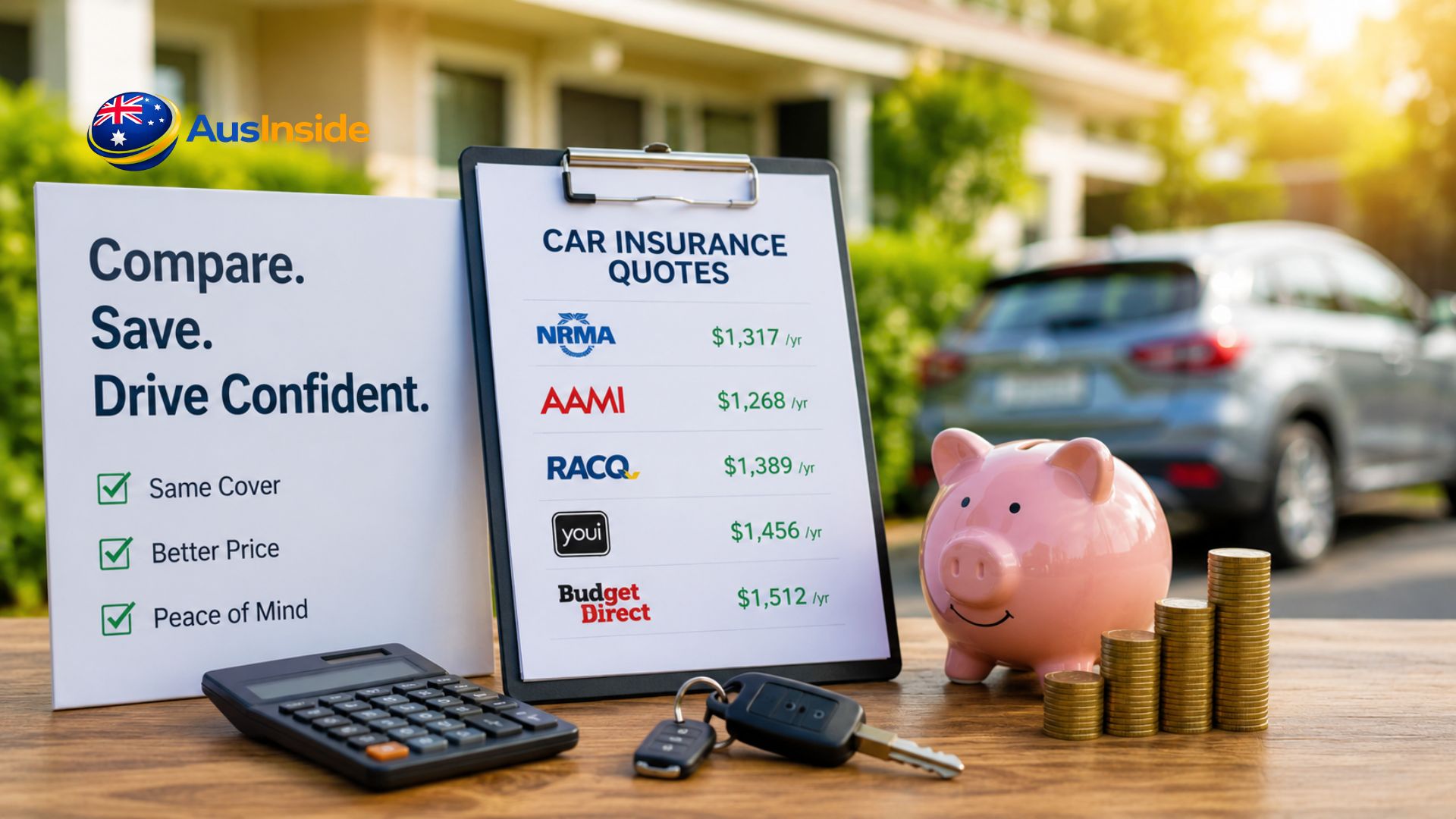
Compare car insurance in Australia means separating your compulsory third party (CTP) cover from your comprehensive or third party policy, requesting quotes from at least 5-6 insurers with identical excess and sum insured, and checking whether your current insurer is quietly charging you a “loyalty tax.” That last point isn’t a guess — ASIC’s March 2026 pricing review found Australians who don’t shop around at renewal pay an average of $312 a year more than new customers for the same policy. We pulled current 2026 premium data, regulator findings, and complaints data from Australian sources to build this guide, so every figure below is verifiable.
- What "Comparing" Car Insurance Actually Means in Australia
- The Levels of Cover You Need to Match First
- Step-by-Step: How We Compare Car Insurance Quotes
- Verified 2026 Premium Data
- Discounts and No-Claim Bonuses That Actually Move the Needle
- What You Actually Need to Know
- Comparison Sites vs. Going Direct to Insurers
- Red Flags We've Learned to Watch For
- Mistakes That Quietly Skew Your Comparison
- FAQs
What “Comparing” Car Insurance Actually Means in Australia
Most drivers compare one number: the renewal premium against a single new quote. That’s not a comparison — it’s a guess dressed up as due diligence.
A real comparison controls for these variables across every quote:
- Same level of cover — comprehensive, third party fire & theft, or third party property only
- Same excess (the amount you pay per claim, not the whole premium)
- Same sum insured basis — agreed value or market value
- Same optional extras — roadside assistance, hire car after accident, no-claim bonus protection
The Levels of Cover You Need to Match First
Australia has four distinct tiers, and mixing them up is the single biggest reason two “cheap” quotes aren’t actually comparable:
| Cover Type | What It Includes | Who It Suits |
| Compulsory Third Party (CTP) | Covers injury to other people; mandatory to register your car | Every registered vehicle owner |
| Third Party Property Only | Damage you cause to someone else’s car or property | Older, low-value vehicles |
| Third Party Fire & Theft | Third party property plus fire and theft of your own car | Vehicles worth under roughly $10,000 |
| Comprehensive | Your car plus third party property, theft, fire, storm and vandalism | Newer or higher-value vehicles |
How you go about CTP will depend on where you reside. For NSW, Queensland and ACT, the CTP policy (commonly known as “green slip” in NSW) is purchased independently of your vehicle’s registration and thus should be compared by itself. There are six insurance companies approved for sale of CTP insurance in NSW:
They charge differently from each other despite offering the same statutory benefits. However, in Victoria, South Australia, Western Australia, Tasmania, and Northern Territory, CTP insurance is included in your registration fees under the government-sponsored scheme and thus not subject to comparison at all.
Step-by-Step: How We Compare Car Insurance Quotes
- Check whether your state requires a separate CTP purchase. If you’re in NSW, QLD, or the ACT, compare CTP insurers first — it’s a legal requirement before you can register the car.
- Pull your current policy schedule. Note your excess, sum insured basis, and any extras you’re already paying for.
- Decide agreed value or market value. Agreed value locks in a payout figure at policy start and typically costs more; market value pays whatever the car is worth at claim time and is usually cheaper but less predictable.
- Get quotes from at least 5-6 providers, mixing comparison-site insurers with those that only sell direct — NRMA, RACV, and RACQ typically aren’t listed on comparison sites and need to be quoted separately.
- Enter identical details every time — same excess, same estimated annual kilometres, same parking location (garage vs street).
- Ask for the new-customer price, not the loyalty renewal price, and compare that against your current insurer’s actual renewal quote.
- Check the insurer’s AFCA complaint history before committing (more on why below).
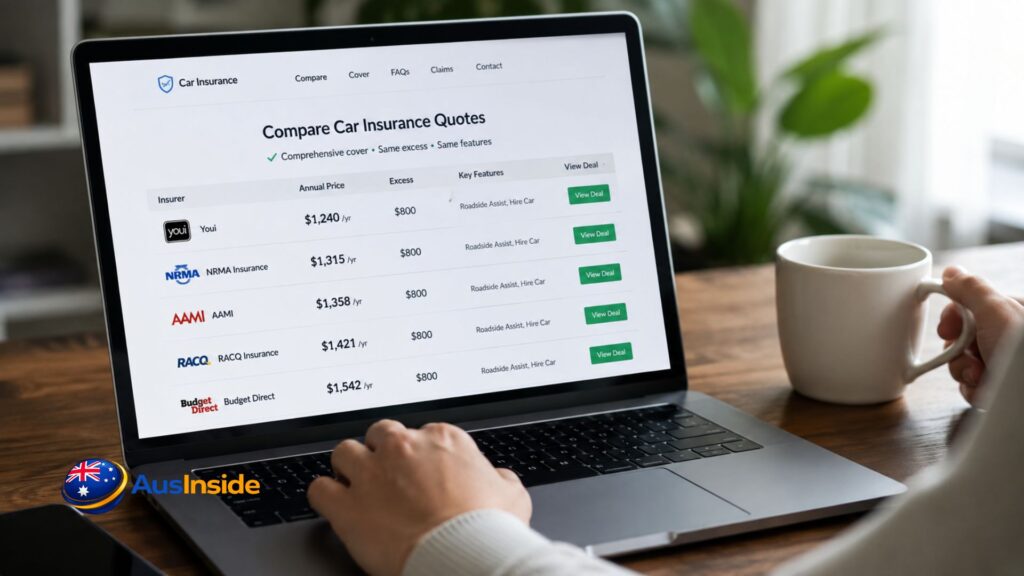
If manually re-entering the same details across half a dozen insurer websites sounds tedious, a side-by-side comparison calculator — like the one on ausinside.com — standardises those inputs once and lines the quotes up automatically, which removes most of the errors that come from re-typing excess and sum insured figures by hand each time.
Verified 2026 Premium Data
Premiums vary by insurer, postcode, vehicle and driver profile, so treat this as a benchmark rather than a personal quote:
| Metric | 2026 Figure | Source |
| National average comprehensive premium | $1,490–$1,680/year | Mozo |
| National average comprehensive premium (alternate methodology) | $1,362/year | Finder |
| Year-on-year premium increase, 2025–26 | ~14% nationally | Mozo |
| Average “loyalty tax” for not shopping around | $312/year | ASIC, via Mozo |
| Comprehensive premium, drivers under 25 (male) | $2,858/year average | Youi, citing Canstar analysis |
| Comprehensive premium, drivers over 50 | $1,183/year average | Youi, citing Canstar analysis |
| Potential saving switching to a top-rated policy | Avg. $2,460 → $1,809/year | Canstar |
| Potential saving by state (CHOICE-recommended vs average) | $96 (QLD) to $583 (NT) | CHOICE |
The state-by-state spread is significant. CHOICE’s April 2026 research found NSW comprehensive premiums ranging from $1,225 to $3,195 depending on insurer, and Northern Territory premiums ranging from $1,497 to $3,839 — meaning the most expensive policy in some states costs more than double the cheapest, for comparable cover.
Discounts and No-Claim Bonuses That Actually Move the Needle
- No-claims bonus (NCB): It increases with every year without claims and may significantly cut down the premium amount, which needs to be compared among all insurers before transferring to a new insurer.
- Multidisciplinary policies: Bundling up the car and home policies with one insurance company usually cuts down the overall premium cost, although the degree of reduction may vary among different insurers.
- Increased excess: Increasing the voluntary excess amount on top of the compulsory excess amount decreases the premium, but is a good option only if you are financially capable enough to bear the excess amount in case of claim.
- Low mileage or pay-as-you-drive policies: Some insurance companies offer reduced premiums for those drivers whose annual mileage is less.
- Security measures: Insuring your car through garaging overnight and installing approved alarms or immobilisers is possible to decrease your premium amount with some insurance companies.
What You Actually Need to Know
Most Australian car insurance guides stop at “get a few quotes and check the excess.” Here’s what that advice leaves out:
- The loyalty tax is now regulator-confirmed, not anecdotal. ASIC’s March 2026 review found a systemic pattern of insurers charging existing customers more than new customers for identical cover, averaging $312 a year. This isn’t a marketing claim from a comparison site — it came from the regulator itself. Set a calendar reminder to re-quote at every renewal, not just when the bill feels high.
- Comparison sites don’t include every insurer. Compare the Market, Canstar, and iSelect are useful for a first pass, but NRMA, RACV, RACQ, and some regional insurers sell direct only and won’t appear in aggregator results. Skipping a direct check with these providers means your “comparison” was never actually complete.
- Comprehensive vehicle insurance is the single most complained-about insurance product in the country. AFCA’s most recent annual review confirms comprehensive vehicle insurance remains the most complained-about insurance product, with claim delays as the leading issue. A cheaper premium from an insurer with a worse claims-handling record can cost you far more in stress and time than it saves in dollars.
- AFCA complaint volumes are rising sharply. Motor vehicle insurance complaints to AFCA hit 12,879 in 2025, up 18% year-on-year, while general insurance complaints overall rose 17% to 34,231. Before choosing based on price alone, it’s worth checking whether your shortlisted insurer’s complaint trend is stable or climbing.
- Agreed value vs market value is rarely explained clearly. Agreed value locks in your payout amount when you buy the policy and typically costs more; market value is usually cheaper but means the insurer decides what your car is worth at claim time, which can be lower than you expect for an older vehicle. Compare quotes on the same basis, and if comparing agreed value against market value, adjust your expectations accordingly.
- CTP is a separate market in NSW, QLD, and the ACT — and it’s genuinely worth comparing. SIRA confirms that while all NSW CTP insurers offer the same statutory benefits under the Motor Accident Injuries Act 2017, insurers set their own prices within approved bands, meaning your green slip price can differ noticeably between the six licensed insurers for identical legal cover.
- Rate hikes aren’t uniform across vehicle types. CHOICE found premiums for hybrids rose about 10% and EVs about 9% over the past year, compared with 5% for petrol and 2% for diesel, so EV and hybrid owners have more to gain from comparing than average.
Comparison Sites vs. Going Direct to Insurers
| Factor | Comparison Sites (Compare the Market, Canstar, iSelect) | Direct-to-Insurer (NRMA, RACV, RACQ, Budget Direct) |
| Speed | Fast — one form, multiple quotes | Slower — separate form per insurer |
| Market coverage | Wide, but excludes several major direct-only insurers | Only that one company’s rate |
| Excess/cover matching | Standardised inputs, fewer entry errors | Manual, higher risk of mismatched cover |
| Best for | First-pass shortlisting across the aggregator market | Locking in a final quote and checking direct-only insurers |
Our practical workflow: run the aggregator comparison first to shortlist 3-4 insurers, then separately quote any major direct-only insurers in your state before deciding. A tool like the comparison calculator on ausinside.com works well for that first pass, since it standardises excess, sum insured, and cover level automatically — the fields most likely to get mismatched when quoting manually across multiple tabs.
Red Flags We’ve Learned to Watch For
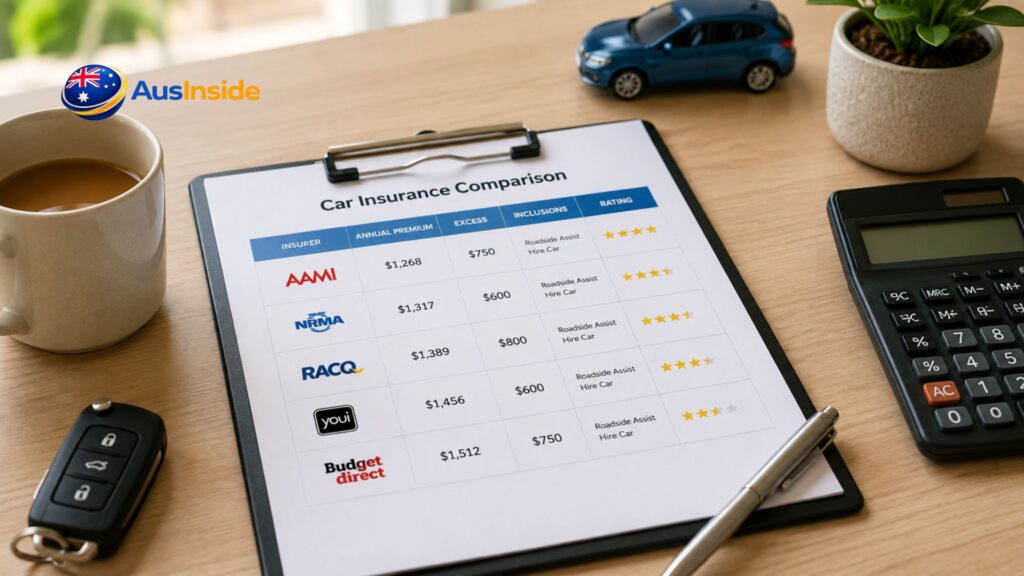
- A quote well below the rest of the pack. Check whether it’s third party fire & theft dressed up next to comprehensive quotes, or whether the excess is unusually high.
- No visibility into the insurer’s AFCA complaint trend. A price that looks good on paper is only a good deal if claims get paid on time.
- Vague answers on agreed vs market value. Ask directly which basis you’re being quoted on and what that means for a total-loss payout.
- Pressure to renew immediately without a fresh quote. Given the confirmed $312/year average loyalty tax, there’s rarely a reason to renew without re-quoting first.
Mistakes That Quietly Skew Your Comparison
- Comparing a comprehensive quote against a third party fire & theft quote without realising the cover level differs.
- Forgetting CTP is a separate purchase in NSW, QLD, and the ACT, and not comparing it alongside your comprehensive policy.
- Assuming your no-claim bonus transfers at full value between insurers without confirming their specific NCB scale.
- Accepting the renewal price without requesting a fresh new-customer quote, given the regulator-confirmed loyalty tax.
- Ignoring the insurer’s claims-handling reputation in favour of the lowest sticker price.
FAQs
How many quotes should I get before deciding?
Five to six is a reasonable target, including at least one or two insurers that don’t appear on comparison sites, such as NRMA, RACV, or RACQ depending on your state.
Is CTP the same as comprehensive car insurance?
No. CTP only covers injury to other people and is either compulsory and separate (NSW, QLD, ACT) or bundled into registration (VIC, SA, WA, TAS, NT). Comprehensive covers damage to your own vehicle plus third party property, theft, and fire, and is always optional but strongly recommended for newer or higher-value cars.
Does comparing quotes affect my no-claim bonus?
No. Requesting quotes doesn’t affect your no-claim bonus or your current policy. Your NCB is tied to your claims history, not to how many quotes you request.
How often should I re-compare my car insurance?
At every renewal, at minimum, given the regulator-confirmed average loyalty tax of $312 a year for not shopping around. Also re-compare after any change in postcode, vehicle, or driving history.
Is the cheapest quote always the best choice?
No. Comprehensive vehicle insurance is the most complained-about insurance product in Australia according to AFCA, largely due to claims delays. A cheaper premium from an insurer with a poor claims-handling record can end up costing more in time and stress than it saves in dollars.
Should I choose agreed value or market value?
It depends on your priorities. Agreed value costs more but guarantees a payout figure agreed at policy start, which suits owners of newer or well-maintained cars who want certainty. Market value is cheaper but leaves the payout amount to be assessed at claim time, which can work against owners of older vehicles.