

Most pages about Katherine High School read like a brochure pasted into a webpage. A few facilities, a mission statement, a phone number. None of it tells you what it’s actually like to send your child to a school that serves a catchment bigger than Victoria, where boarding is a daily reality for hundreds of students and more than 30 languages are spoken in the corridors.
Katherine High School is the only government secondary school for the entire Katherine region of the Northern Territory. That single fact shapes almost everything about how it runs — from hostel accommodation to free bus travel to the way it handles a Year 9 NAPLAN comparison that, frankly, most ranking sites get wrong.
This article pulls together what the school’s own policies say, what its leadership team has been recognised for, and what tends to get left out of every other write-up: who actually runs the school, how the bus system works, what the report cycle looks like, and why comparing this school’s test scores to a metro average is close to pointless without context.
Whether you’re a parent weighing up enrolment, a teacher considering a move to the Territory, or simply trying to understand how a remote regional school functions, you’ll find the practical answers here — not just the marketing version.
You May Like It: Newman Visitor Centre
- Quick Overview
- A School Built Around a Region, Not a Suburb
- Facilities Worth Knowing About
- Boarding: The Part Most Articles Skip
- Getting to School: The Free Bus System
- Curriculum, Assessment, and Senior Pathways
- Leadership and Staff: A Detail Almost Nobody Reports
- Reading NAPLAN and MySchool Data Properly
- Common Mistakes Families Make
- Enrolling: The Actual Steps
- Key Takeaways
- Conclusion
- Frequently Asked Questions
Quick Overview
| Detail | Information |
|---|---|
| Full name | Katherine High School (KHS) |
| Type | Government, co-educational, secular, comprehensive secondary |
| Year levels | Years 7–12 |
| Location | Grevillea Road, Katherine East, NT 0850 |
| Established | 1988 |
| Distance from Darwin | Approx. 315 km south |
| Enrolment | Around 500 students |
| First Nations enrolment | 60%+ of the student body |
| Principal | Ms Nick Lovering |
| Boarding | Fordimail Hostel, Callistemon House |
| Alternative campus | KFLEC, Kintore Street |
| School hours | 8:15 am – 2:40 pm |
| Phone | (08) 8973 8200 |
| Website | katherinehighschool.com.au |
A School Built Around a Region, Not a Suburb
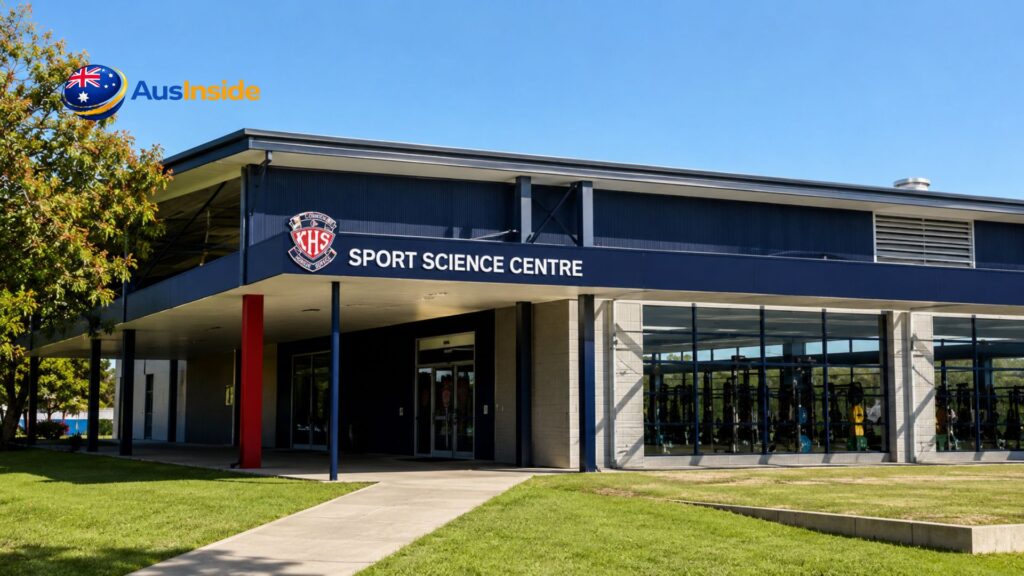
Katherine High School opened in 1988. The original buildings came first, W Block followed in the early 1990s, X Block arrived in 2007, and the Sport Science Centre was finished in 2010 and formally opened in 2011. None of that is unusual on its own — schools expand. What’s unusual is why it expanded the way it did.
Most secondary schools serve a neighbourhood. This one serves a territory. The catchment stretches across a region larger than the entire state of Victoria, pulling in students from cattle stations, remote Aboriginal communities, the Tindal RAAF base, and the town centre itself. A school operating at that scale can’t run on the same assumptions as a suburban high school where every kid lives within walking distance.
That’s the lens worth holding onto for everything that follows.
Who Actually Makes Up the Student Body
- Children of RAAF families posted to Tindal Air Base
- Traditional and urban Indigenous students, making up more than 60% of total enrolment
- Rural and pastoral families from stations across the Big Rivers region
- Town-based public sector and business families
- Students collectively speaking more than 30 languages
A campus where 30-plus languages are in everyday use isn’t an administrative footnote. It directly shapes how teachers plan lessons, how the school communicates with families, and how new students settle in during their first weeks.
Google Map Location
Facilities Worth Knowing About
| Facility | Practical Value |
|---|---|
| Air-conditioned gymnasium | Makes year-round indoor PE viable in Territory heat |
| Undercover basketball court | Keeps sport running through the wet season |
| Tennis and netball courts | Used for curriculum classes and competitive teams |
| Networked computer labs and pods | Spread across faculty areas, not centralised |
| Hospitality kitchen | Feeds directly into VET certification |
| Sport Science Centre (2011) | Supports a dedicated senior Sport Science pathway |
| Art and Music rooms | Specialist spaces, not shared general classrooms |
The detail competitors rarely mention: computer access is distributed by faculty rather than locked in a single shared lab. It sounds minor, but it means a science class doesn’t lose its turn on the computers because an English class booked the room first.
Boarding: The Part Most Articles Skip
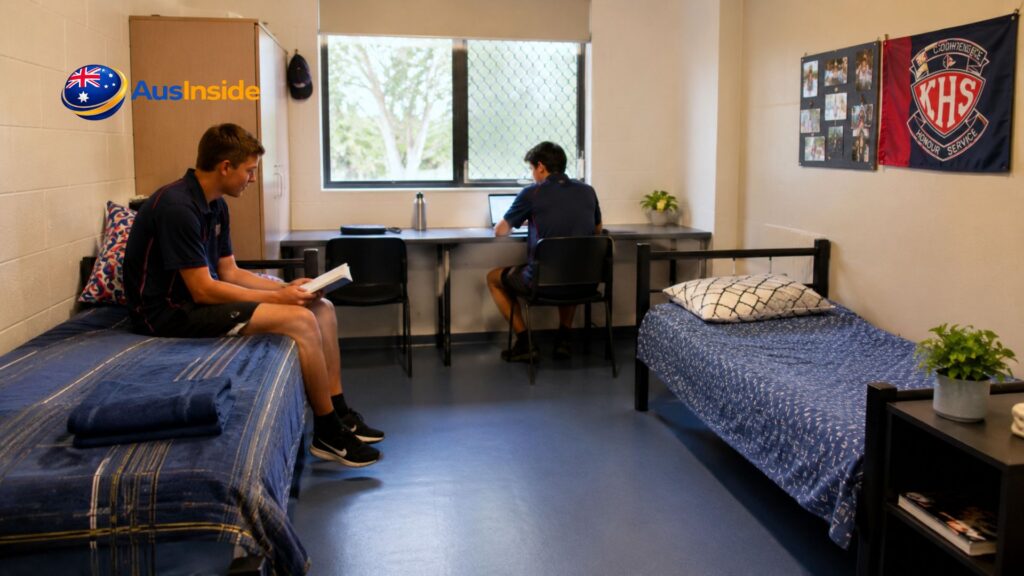
Here’s something almost every other page about this school glosses over entirely — for a large share of students, attending Katherine High School means living away from home.
Two facilities make this possible:
- Fordimail Hostel — accommodation for students travelling in from remote communities and stations
- Callistemon House — a departmental boarding facility, managed directly by the school’s Principal
For a family on a station several hours out, this isn’t a lifestyle preference. It’s the only realistic route to secondary schooling at all. If you’re considering it, ask the school directly about supervision ratios and how often students get home — these details shift year to year and rarely make it onto a website.
Getting to School: The Free Bus System
This is one of the most practical details families search for and almost never find clearly stated. Katherine High School runs a free school bus system for enrolled students.
- Buses are for home-to-school travel only — they’re not a general public transport service
- Students must follow the driver’s instructions at all times
- Misbehaviour can result in suspension from bus travel, at the bus company’s discretion
- Licensed student drivers may drive themselves to school with parent or guardian permission, but vehicles cannot be used during recess or lunch
If your child currently relies on a long commute, this single policy can be the deciding factor in whether daily attendance is realistic without boarding.
Curriculum, Assessment, and Senior Pathways
The Middle Years program follows the Australian Curriculum, assessed through:
- Standard classroom assessment against curriculum outcomes
- NAPLAN testing in reading, writing, and numeracy (Years 7 and 9)
- PAT testing for reading and mathematics, used internally to track growth between NAPLAN cycles
How Reporting Works
Reports are issued at the end of Term 2 and Term 4, each carrying an achievement grade per subject plus a written comment. For Years 7–9, any major assessment task must come with clear achievement standards, task details, a marking rubric, and a fixed due date — and once a student knows that date, meeting it is treated as their own responsibility, not something that gets renegotiated after the fact.
Senior Pathways
- Extension classes for high-achieving students
- “Pathways” programs for students needing alternative certification routes
- Intensive classes to re-engage students who’ve fallen behind
- VET certificates, including Hospitality
- Work experience placements
- Distance education for students who can’t attend consistently in person
Enrichment Programs Worth Asking About
- HEAL Program — prepares senior students for life beyond school, not just exams
- Clontarf Foundation — mentoring for young Indigenous men, built around AFL and engagement
- Stars Foundation — the equivalent structured program for young Indigenous women
If your child responds better to mentoring than a standard classroom, these are worth raising directly at enrolment.
Leadership and Staff: A Detail Almost Nobody Reports
This is genuinely overlooked territory. Katherine High School’s leadership and teaching staff have picked up recognition well beyond what a typical regional school profile mentions:
- A staff member received the Big Rivers Secondary Educator of the Year award in 2022
- The same educator became an ACEL New Voice Scholar and a Commonwealth Bank Schools Plus Teaching Fellow in 2023
- The school has welcomed new Assistant Principals into its leadership team in recent years, reflecting active internal succession rather than long-term stagnation
- The school regularly hosts pre-service teachers from Teach For Australia for extended placements
Why does this matter to a parent? Recognition like this generally doesn’t happen at schools that are simply going through the motions. It points to a staff culture actively investing in its own development, which tends to show up in classrooms, not just on LinkedIn.
Reading NAPLAN and MySchool Data Properly
Katherine High School’s results sit on the national MySchool website, and the school points enquiries there rather than self-publishing cherry-picked figures — a fair approach.
Where most comparison sites go wrong: they line this school’s scores up against the raw national average and stop there. That’s a flawed comparison for a school where the majority of students arrive from remote, multilingual, sometimes educationally disrupted backgrounds. It’s not an excuse for weak outcomes — it’s context that changes what “good” actually looks like here.
What’s Worth Checking Instead
- Compare against statistically similar schools, not the national average
- Look at multi-year trends, not one test cycle
- Ask how the school tracks growth for students who enrol mid-year from remote areas
- Remember NAPLAN wasn’t designed around a 30-language, highly mobile cohort
Common Mistakes Families Make
- Assuming “regional” automatically means under-resourced — the Sport Science Centre and dedicated Hospitality kitchen say otherwise
- Leaving hostel enquiries until weeks before term starts, instead of early in the process
- Comparing NAPLAN scores with no context at all
- Not asking about English language support, despite the school’s genuinely multilingual population
- Confusing the Year 6-to-7 transition (lighter process, mostly orientation days) with a standard mid-year transfer (which requires a full enrolment meeting)
Enrolling: The Actual Steps
- Download the Enrolment Pack for the correct year level from the school’s website
- Complete and sign it, gathering required supporting documents
- Submit everything to Main Administration, in person or via the return method the school specifies
- Attend an enrolment interview with the Principal — not required for Year 6 students moving straight into Year 7
Bell Times
| Event | Time |
|---|---|
| First lesson | 8:15 am |
| Recess | 10:23 am |
| Lunch | 1:01 pm |
| Last lesson ends | 2:40 pm |
Note: It may changes according to seasons.
Have A Look On It: Royal Melbourne Hospital
Key Takeaways
- Katherine High School is the only government secondary school for a region larger than Victoria.
- More than 60% of students are First Nations, with over 30 languages spoken across campus.
- Boarding through Fordimail Hostel and Callistemon House is essential infrastructure, not an optional extra.
- A free school bus system serves home-to-school travel, separate from any public transport.
- Staff recognition — including a 2022 Big Rivers Educator of the Year award — points to a genuinely invested teaching culture.
- NAPLAN comparisons only mean something when read against similar schools and multi-year trends.
Conclusion
Katherine High School isn’t trying to imitate a metropolitan school dropped into the Territory. It’s built around the actual people who walk through its gates — station kids, RAAF families, town residents, and remote Indigenous students who each arrive with a completely different starting point. The facilities are real, the staff recognition is real, and so are the logistical challenges of distance, language diversity, and boarding. A fair read of this school means holding both sides of that picture at once, rather than leaning on a single glossy page or a single discouraging number.
Frequently Asked Questions
Who is the current Principal of Katherine High School?
Ms Nick Lovering currently leads the school.
Does Katherine High School provide transport for students?
Yes, enrolled students can use a free school bus system for home-to-school travel. It isn’t a general public transport service, and misuse can result in a student losing bus access.
When are student reports issued?
At the end of Term 2 and Term 4, with a grade and written comment for each subject.
Is boarding available for students from remote areas?
Yes, through Fordimail Hostel and Callistemon House, both supporting students who can’t commute from stations or remote communities.
How should I interpret the school’s NAPLAN results?
Compare them against statistically similar schools and multi-year trends on MySchool, rather than a raw national average, given the school’s unique and highly diverse intake.
What support exists for Indigenous students specifically? The Clontarf Foundation supports young Indigenous men through structured mentoring, and the Stars Foundation provides an equivalent program for young Indigenous women.
Can senior students drive themselves to school?
Yes, with parent or guardian permission, though vehicles can’t be used during recess or lunch breaks.
What’s the difference between enrolling for Year 7 and transferring mid-schooling?
Year 6 students moving into Year 7 generally attend orientation days without a formal enrolment meeting, while students transferring from another school must complete the full Enrolment Pack and attend an interview with the Principal.