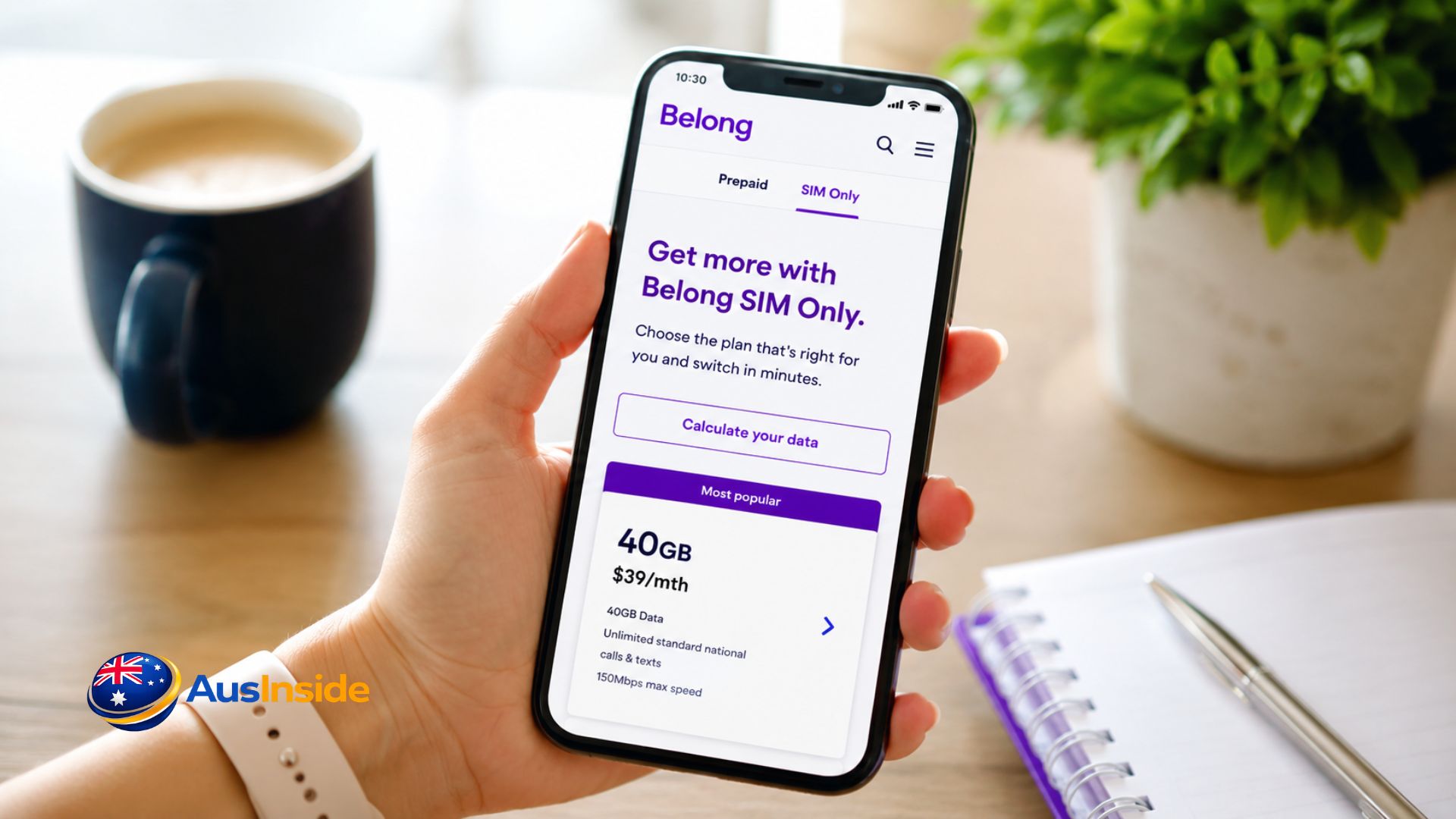

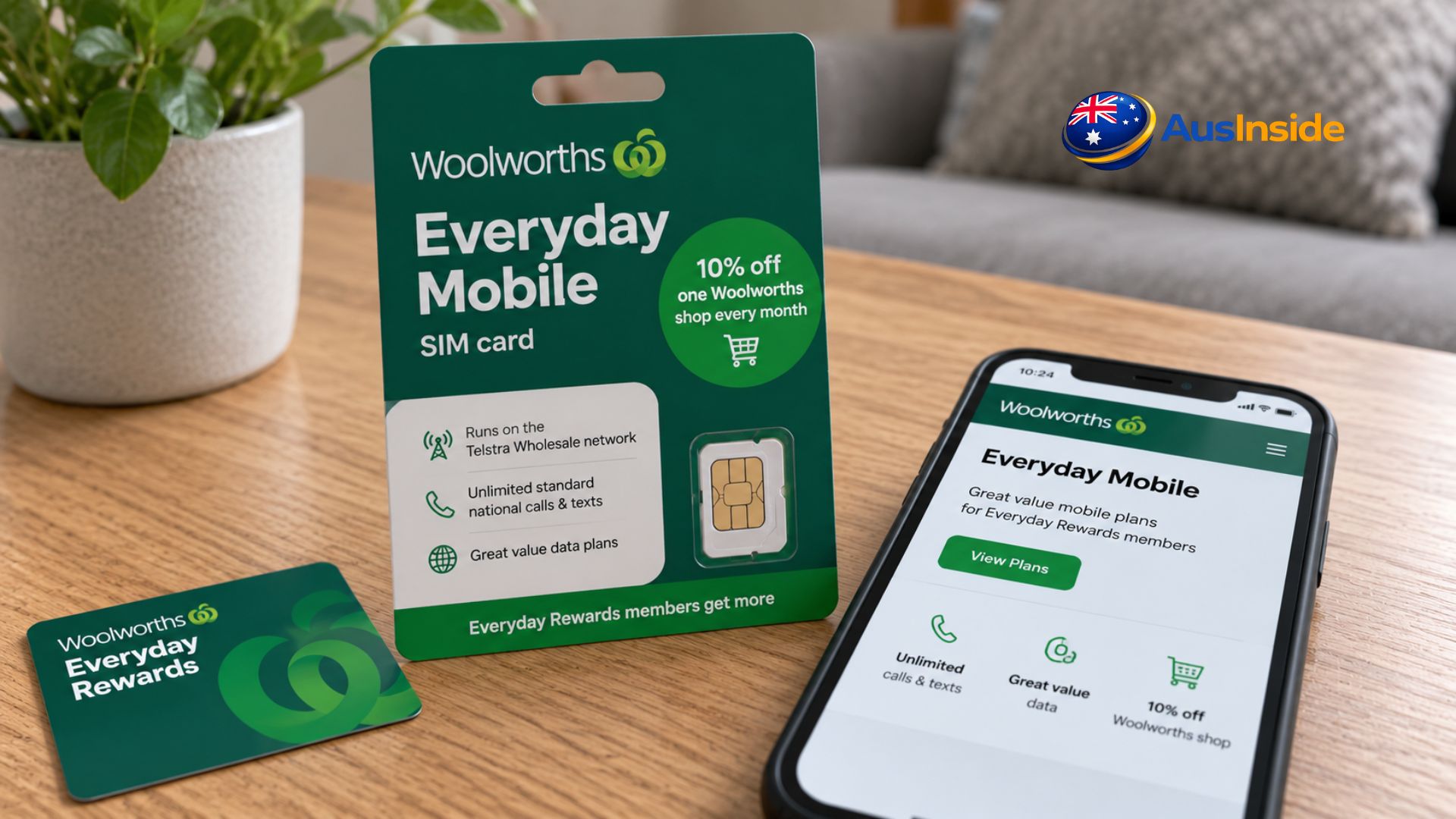
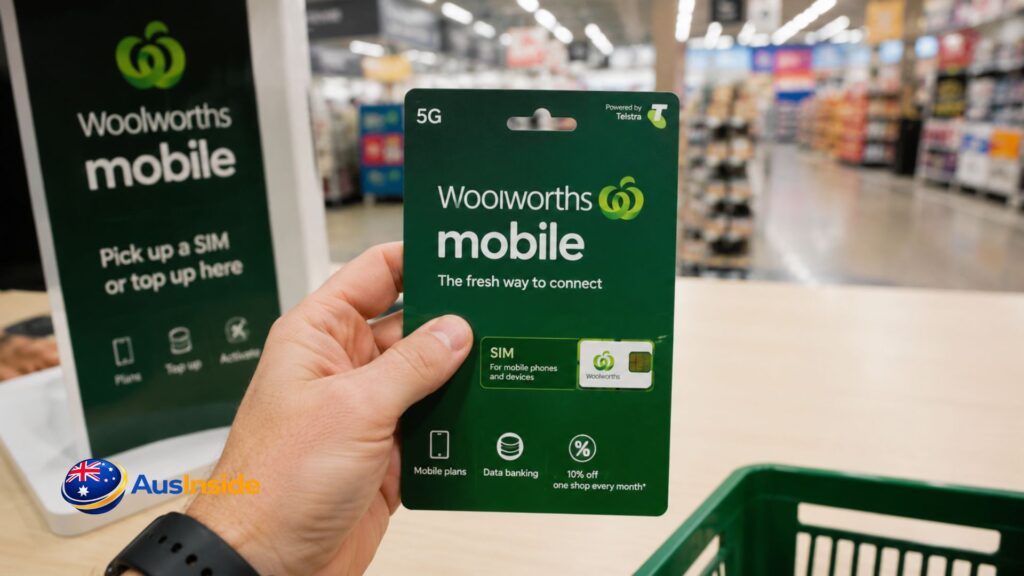
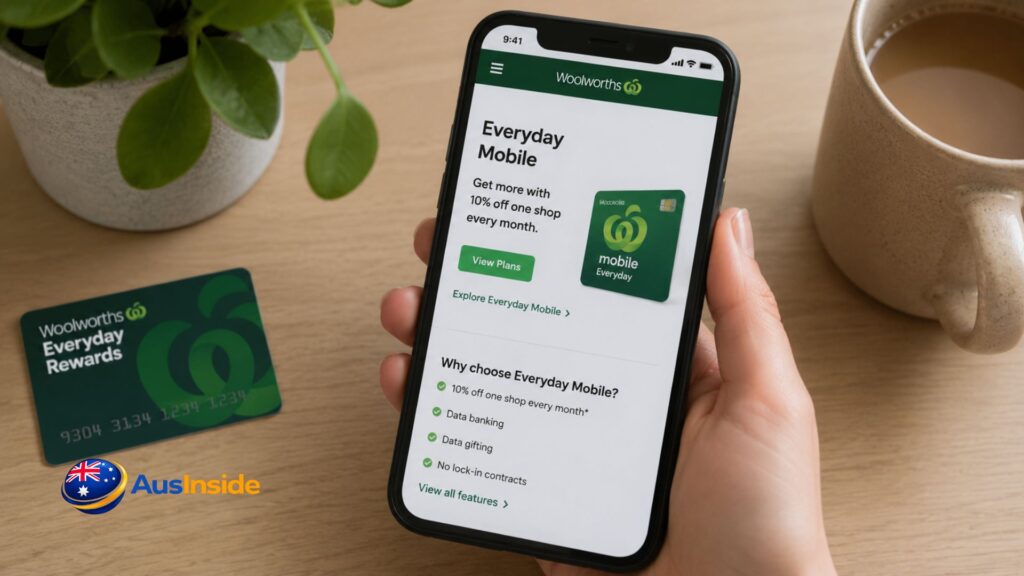
Everyday Mobile Plans from Woolworths (formerly branded Woolworths Mobile) is an MVNO running on the Telstra Wholesale network, with SIM-only plans currently starting around $36-$40 a month for Everyday Rewards members. The real value isn’t just the data — it’s the 10% off one Woolworths shop per month, which most comparisons undersell or oversell without doing the actual math. Here’s what the plans cost right now, what the legal fine print says happens when you run out of data, and where this MVNO genuinely wins or loses against Boost, Belong, and ALDI Mobile.
- What You're Actually Buying: Network and Speed
- Current Plan Lineup and Real Pricing
- What Actually Happens When You Run Out of Data
- The Everyday Rewards Discount: What It's Actually Worth
- How It Stacks Up Against Boost, Belong, and ALDI Mobile
- The January 2026 Price Change Existing Customers Should Know About
- Step-by-Step: Choosing an Everyday Mobile Plan
- What Most Guides Tells You Wrong
- Red Flags to Watch For
- FAQs
What You’re Actually Buying: Network and Speed
Everyday Mobile doesn’t own any towers. It resells access to Telstra’s Wholesale network, which is a smaller slice of Telstra’s full infrastructure — reaching roughly 98.8% of the Australian population, compared to Telstra’s own retail network and Boost Mobile’s coverage (the only Telstra MVNO with access to the full network) at closer to 99.7%.
Two details worth knowing before you sign up:
- Download speeds are capped at 100Mbps on both 4G and 5G access, regardless of which plan tier you pick — confirmed across Everyday Mobile’s current plan range.
- The wholesale network gap mostly shows up in regional and remote areas. In the cities, most users won’t notice a difference between Woolworths, Boost, or Telstra retail.
Current Plan Lineup and Real Pricing
Everyday Mobile sells three plan structures: 30-day prepaid, long-expiry prepaid (180 or 365 days), and month-to-month SIM-only (postpaid). Pricing below reflects current published rates as of mid-2026.
| Plan Type | Starting Price | Data | Notes |
| 30-day Prepaid | $25/month | Varies by tier, includes bonus data promos | Excess data: $10/GB or $25/10GB, purchased manually |
| Long Expiry Prepaid (180-day) | From $100 | Set allowance for the period | No lock-in, no early termination fee |
| Long Expiry Prepaid (365-day) | From $170 | Set allowance for the period | Legacy long-expiry plans were discontinued from January 2026 |
| SIM-Only Postpaid (5G) | $36/month (Everyday Rewards) or $40 (non-member) | 70GB+, varies with current promos | Unlimited standard national calls/texts, unlimited international calls/SMS to select destinations |
Everyday Mobile also runs a Data Bank feature: unused data rolls over automatically, up to a cap of 500GB on prepaid plans and 1,000GB on postpaid SIM-only plans. You can also gift up to 50% of your included data, in 1GB increments, to another active Everyday Mobile plan — useful for a partner or family member on the same provider.
What Actually Happens When You Run Out of Data
This is the detail almost no comparison article checks, because it’s buried in the Critical Information Summary rather than the marketing page.
Two important, legally disclosed facts:
- Excess data does not kick in automatically. If you use up your included data, you don’t get charged per-GB by default — you simply need valid credit to purchase a data add-on. No add-on purchased means no more data until your next recharge.
- If you don’t recharge before your plan expires, your entire service stops — calls, SMS, MMS, and data all cease immediately, per Everyday Mobile’s own Critical Information Summary. This is a harder cutoff than some competitors.
Compare that to Belong, another Telstra Wholesale MVNO, which instead slows speeds to around 1-1.5Mbps once your data allowance is used up rather than cutting service entirely. If uninterrupted access matters more to you than saving a few dollars, that structural difference is worth knowing before you switch.
The Everyday Rewards Discount: What It’s Actually Worth
The headline perk is 10% off one Woolworths shop per month, up to $50 in savings, available to Everyday Rewards members on eligible SIM-only and postpaid plans. Run the math before assuming it’s automatically worth it:
| Monthly Grocery Spend | 10% Discount | Annual Value |
| $200 | $20 | $240 |
| $300 | $30 | $360 |
| $500 (capped at $50 discount) | $50 | $600 |
If your household grocery spend is at or above $500 in a single shop, the discount alone can offset most or all of a mid-tier plan’s monthly cost. If you rarely shop at Woolworths, this perk adds close to nothing, and you should compare purely on data and price against other Telstra MVNOs.
How It Stacks Up Against Boost, Belong, and ALDI Mobile
| Provider | Network Access | Standout Feature | Best For |
| Everyday Mobile (Woolworths) | Telstra Wholesale (~98.8%) | 10% off Woolworths shop, data banking + gifting | Regular Woolworths shoppers |
| Boost Mobile | Full Telstra network (~99.7%) | Only Telstra MVNO with full network access | Regional/remote users, best coverage priority |
| Belong | Telstra Wholesale | Unlimited data option — throttles to ~1-1.5Mbps instead of cutting off | Users who want to never lose connectivity |
| ALDI Mobile | Telstra Wholesale | Budget PAYG-style pricing | Light users wanting the lowest possible cost |
The consistent verdict across independent comparisons: Boost wins on raw coverage because it’s the only Telstra reseller with the full network, while Everyday Mobile and Belong compete mainly on perks and data handling rather than reach.
The January 2026 Price Change Existing Customers Should Know About
In January 2026, Everyday Mobile discontinued its long-running legacy long-expiry plans for customers who’d been on them via auto-recharge. Affected customers were offered a replacement $20-per-30-days plan with 15GB of data and the same 10% monthly shopping discount — but run over 12 months, that replacement plan works out to roughly $70 more per year than the legacy 365-day plan it replaced, and about $90 more than the equivalent 180-day plan.
The lesson for current subscribers: if you’ve been on the same Everyday Mobile plan for several years without checking your account, there’s a real chance you’re on a “special alternative plan” that costs noticeably more than what a new customer would pay for similar data today. It’s worth logging into My Account or the app at least once a year to check.
Step-by-Step: Choosing an Everyday Mobile Plan
- Check your actual monthly grocery spend at Woolworths — the 10% discount is only meaningful above roughly $200-300/month.
- Decide prepaid vs. postpaid based on whether you want the ability to cancel anytime with zero commitment (both are no lock-in, but postpaid renews monthly by default).
- Estimate your real data usage from your current provider’s app before picking a tier — Data Bank rollover means overbuying is less costly than on plans without banking, but it’s still wasted money upfront.
- Read the Critical Information Summary for your specific plan (linked on every plan page) to confirm the exact expiry and add-on rules before signing up.
- If you regularly leave metro areas, compare Everyday Mobile’s Wholesale coverage against Boost’s full-network access for your specific travel routes.
- Set a recharge reminder if you’re on a 30-day prepaid plan, since missing expiry cuts your service immediately rather than just slowing it down.
- Revisit your plan every 12 months, especially if you signed up more than 2 years ago — legacy plans are being phased out with real cost increases.
What Most Guides Tells You Wrong
- They quote the 10% grocery discount without the math. A $50/month cap only matters if you’re already spending $500+ in one shop — most single-person households won’t hit that ceiling.
- They don’t distinguish Wholesale network access from Boost’s full Telstra access, treating all Telstra MVNOs as functionally identical when coverage in regional areas genuinely differs.
- They rarely mention that running out of data doesn’t auto-charge you — you have to manually buy an add-on, which is consumer-friendly compared to bill-shock models elsewhere, but means your service can simply stop working mid-cycle if you’re not paying attention.
- They don’t flag the immediate-cutoff-on-expiry rule, buried in the Critical Information Summary, which is a real difference from Belong’s throttle-instead-of-cutoff model.
- They skip real customer service experiences. Independent reviews on ProductReview.com.au include recurring complaints about difficulty reaching support and services being suspended abruptly after billing issues — worth weighing against the grocery discount if reliable support access matters to you.
If you want to check today’s plan pricing and inclusions against your own usage before switching, a side-by-side comparison tool like the one at ausinside.com is a faster way to see current rates than relying on any single provider’s plan page.
Red Flags to Watch For
- Being on a legacy plan without knowing it’s been quietly repriced
- Assuming the grocery discount offsets the plan cost without checking your actual spend
- Missing a prepaid recharge date and losing full service instead of just slowing down
- Comparing “coverage” claims without checking whether a provider uses Telstra Wholesale or the full Telstra network
FAQs
Is Everyday Mobile from Woolworths actually on the Telstra network?
Yes — it operates as an MVNO on the Telstra Wholesale network, covering about 98.8% of the population, slightly less than Telstra’s own retail footprint or Boost Mobile’s full-network access.
What happens if I run out of data before my next recharge?
Nothing is charged automatically. You need to manually purchase a data add-on if you want more data before your plan renews, per Everyday Mobile’s Critical Information Summary.
Is the 10% Woolworths discount worth signing up for on its own?
Only if your grocery spend is high enough to make the discount meaningful — at the $50/month cap, you’d need to spend $500 in a single shop to max it out. Below $200/month in groceries, the discount adds relatively little value.
Is Everyday Mobile better than Boost Mobile?
It depends on priority. Boost has better raw network coverage since it’s the only Telstra MVNO with full network access, while Everyday Mobile’s edge is the grocery discount and data banking/gifting features for households already shopping at Woolworths.