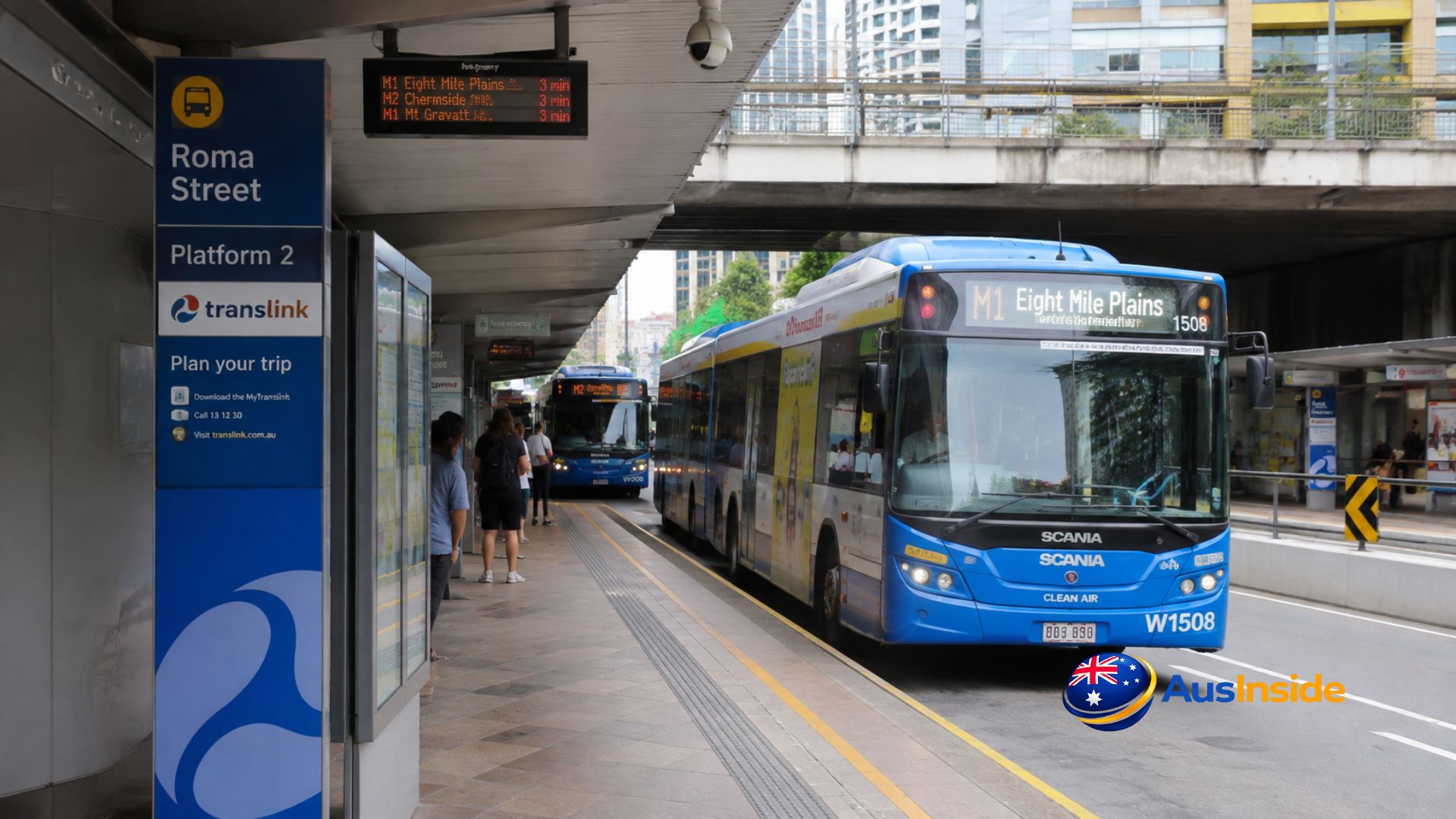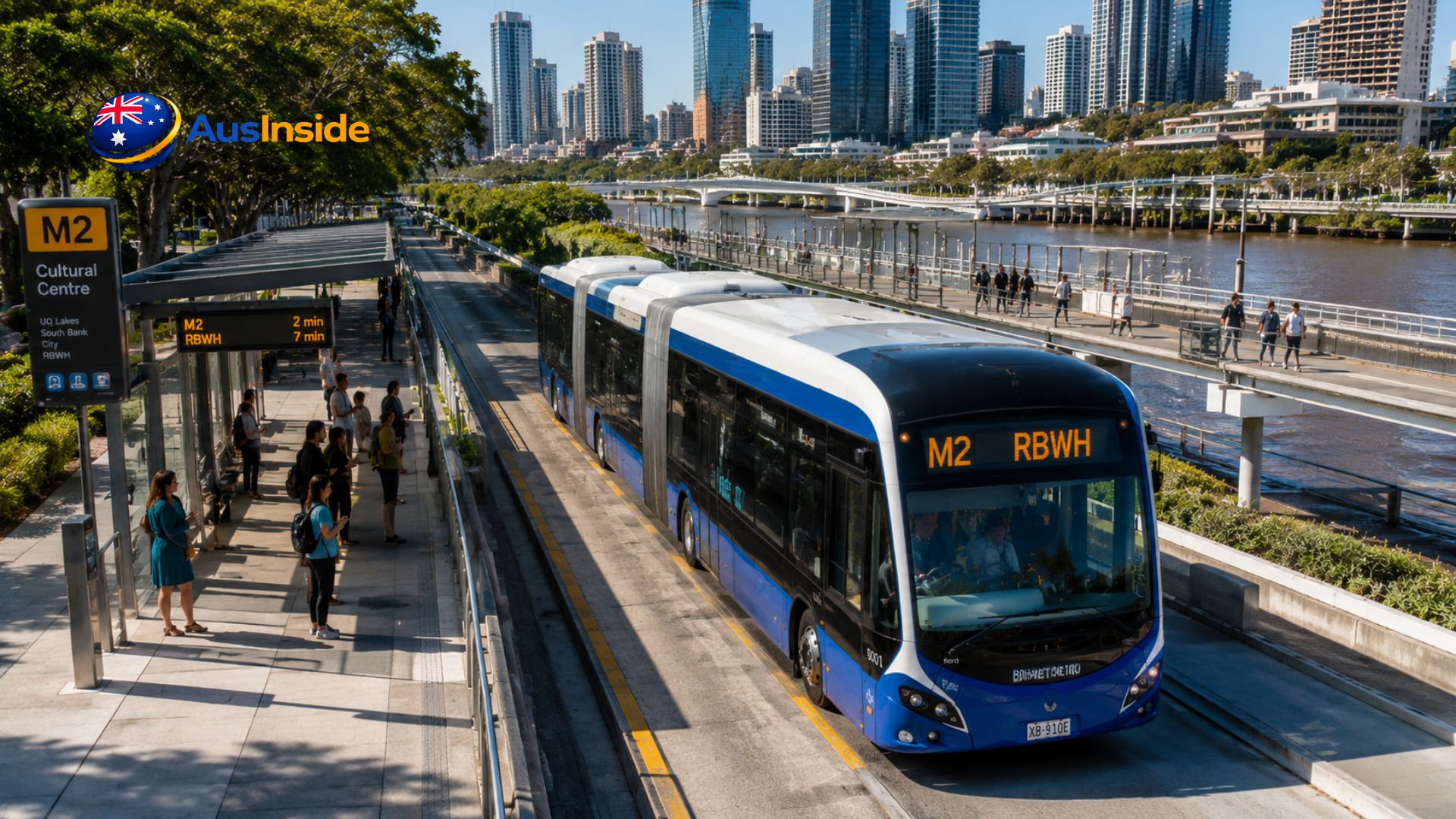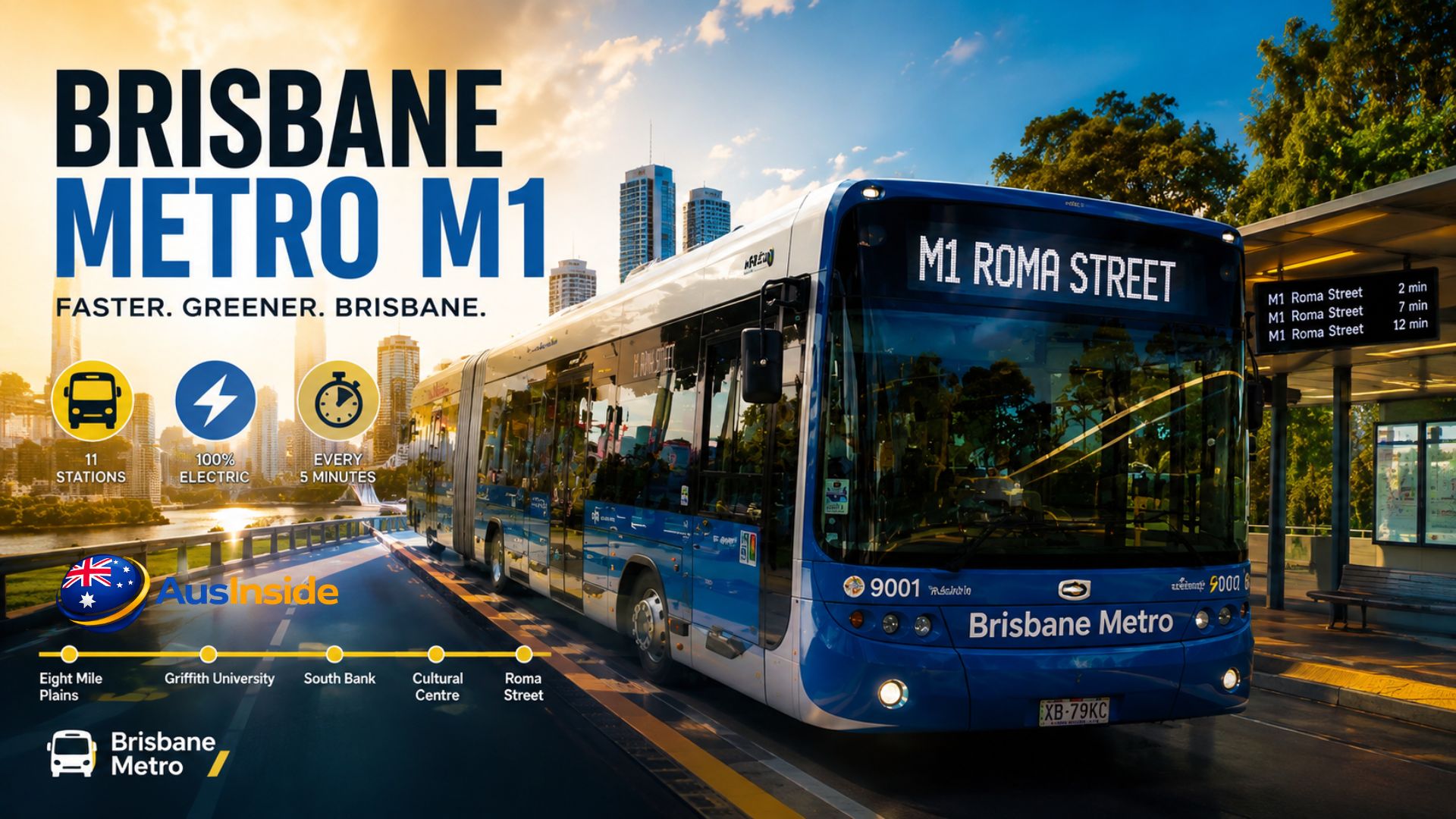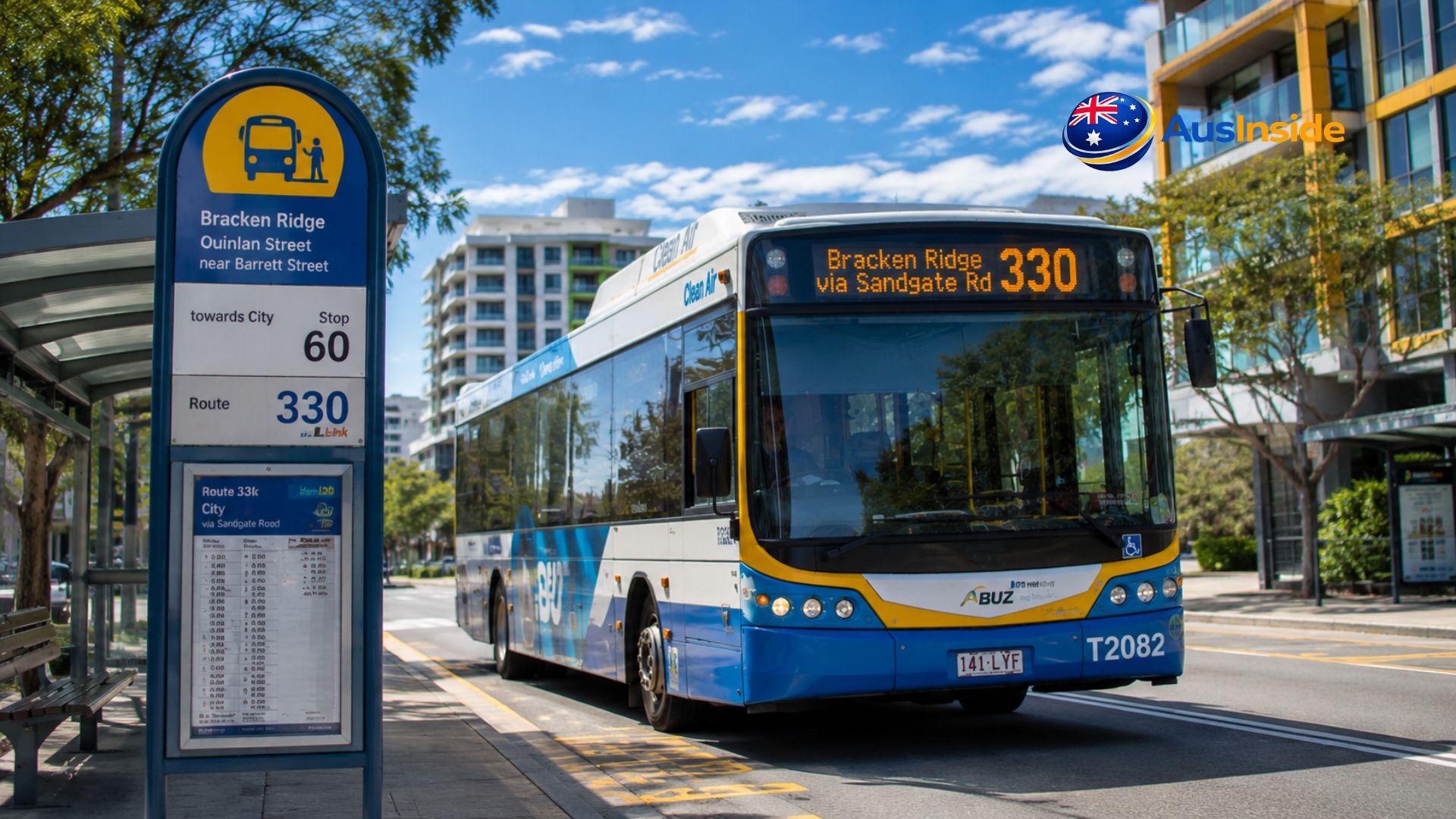

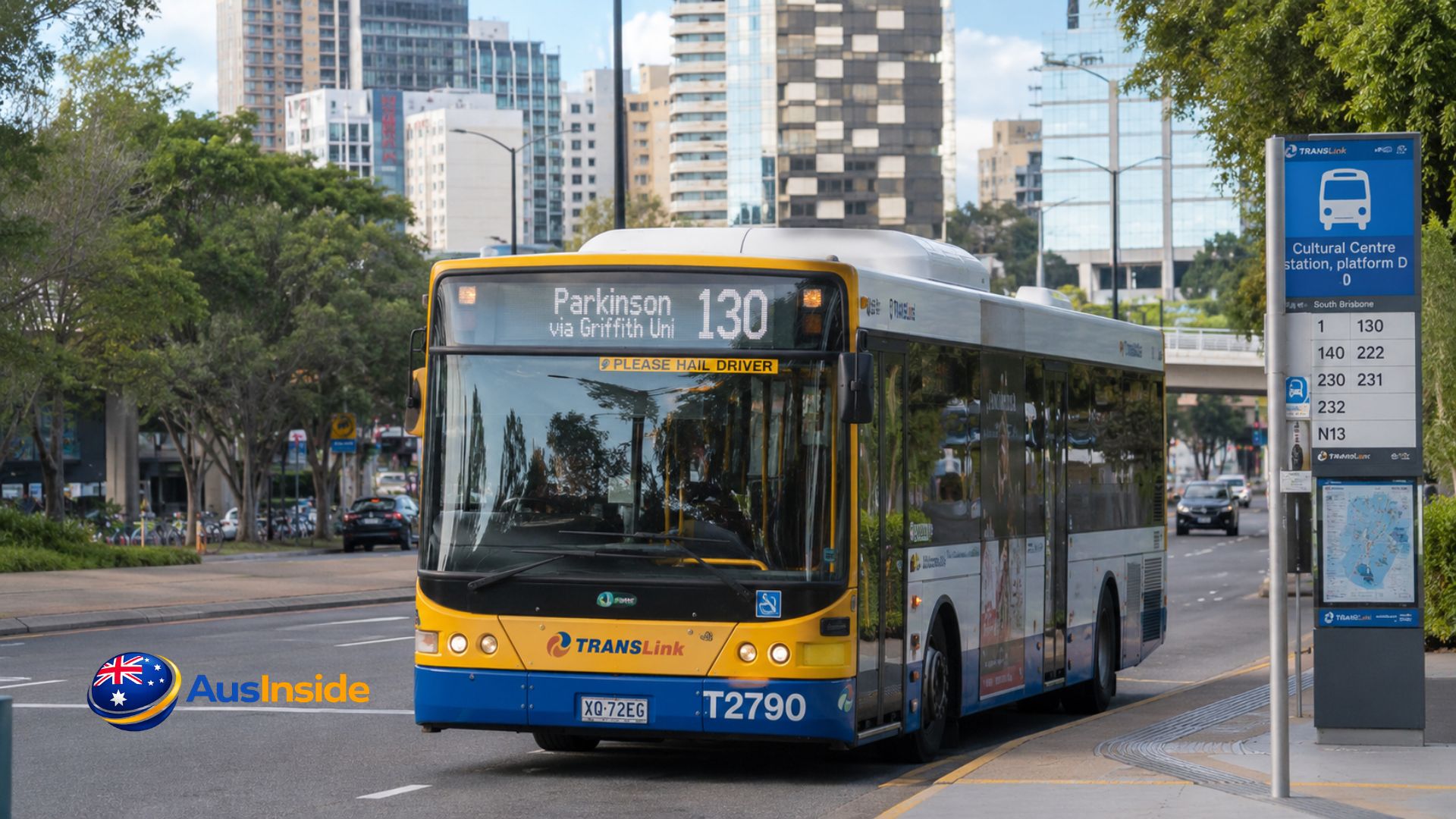
Route 130 connects Parkinson and the City along the Mains Road bus corridor, passing through Sunnybank, Nathan campus of Griffith University and South Bank to terminate at Queen Street Station. It is a 30-stops, about 60 minutes long run which operates everyday from about 4:40 am till 10:40 pm. If you live in the Mains Road/Beaudesert Road and require a direct line into the city without using a car, this is the bus you will be taking.
We’ve ridden this route at peak hour, off-peak, and on weekends to see where it actually delivers and where it drags. Here’s everything you need, without the padding.
- What Is the 130 Bus in Brisbane?
- Route 130 Timetable and Operating Hours
- Full Stop List — Where the 130 Actually Goes
- Route 130 Fares: What You'll Pay
- How to Plan a Trip on Route 130
- What We Noticed Riding the 130 Ourselves
- Route 130 vs Nearby Alternatives
- Common Issues and How to Handle Them
- Conclusion
- FAQs
What Is the 130 Bus in Brisbane?
Bus number 130 is a TransLink bus that runs on the Mains Road bus route connecting the suburb of Parkinson in the south to the Brisbane City Centre.
| Detail | Information |
| Operator | TransLink (Brisbane Transport network) |
| Route name | Parkinson – City |
| Start point | Illaweena St at Stretton Gardens / Waterstone |
| End point | Queen Street Station, CBD |
| Total stops | Approximately 30 (varies slightly by direction) |
| Trip length | Around 30km |
| Average travel time | 55–76 minutes, direction and traffic dependent |
| Days of operation | Every day, including public holidays |
| Operating hours | Roughly 4:40am – 10:46pm |
| Night service | Covered separately by the N130 (Valley – Algester/Parkinson) |
The route basically runs along the busiest part of the Mains Road bus route, making it very important for those commuters who come from Sunnybank, Robertson and also Griffith University students, who do not want the trouble of parking near the university or the city.
Route 130 Timetable and Operating Hours
The timetable can change depending on the day and the direction you are traveling in, so treat the times mentioned below as approximations only.
City-bound (Parkinson to Queen Street Station):
- First service: around 4:40am
- Last service: around 10:27pm (varies by day)
- Peak frequency: every 10–20 minutes on weekday mornings
- Off-peak frequency: every 20–30 minutes
Outbound (Queen Street Station to Parkinson/Waterstone):
- First service: around 6:49am
- Last service: around 11:40pm
- Peak frequency: every 10–20 minutes on weekday evenings
Weekend service runs on a reduced timetable — expect closer to 30-minute gaps between buses rather than the tighter weekday spacing. If your trip falls outside these windows, don’t guess: the N130 night route picks up along a different but overlapping corridor once the 130 stops running.
How to Check Live Times
- Open the TransLink app or website and search “130.”
- Enter your starting stop (e.g., “Mains Rd at Sunnybank”).
- Cross-check against the Transit app or Moovit if you want a second real-time source — useful during service disruptions when TransLink’s own updates lag.
- Screenshot your times if you’re heading somewhere time-sensitive, like an exam at Griffith or a flight connection. Mobile signal along parts of Mains Road can be patchy at peak hour.
Full Stop List — Where the 130 Actually Goes
Grouped by area so you can find your section without scrolling through all 30 stops in order.
Parkinson / Algester (southern end)
- Illaweena St at Waterstone
- Illaweena St at Tamarisk Way
- Algester Rd at Lichfield Place
- Algester Rd at Parkinson East
- Algester Rd at Lake Eyre Crescent
- Algester Rd at Glenfield / Nottingham
Ridgewood / Algester East
- Ridgewood Rd at Ridgewood Heights
- Ridgewood Rd at Ridgewood Park
- Algester Rd at Algester East
- Algester Rd at Beaudesert Road
Sunnybank Hills / Sunnybank corridor
- Beaudesert Rd at Highlands Drive
- Calam Rd near Lear St
- Pinelands Rd at Sunnybank Hills South
- Pinelands Rd at Hellawell / Barney Street
- Mains Rd at Altandi
- Mains Rd at Turton Street
- Mains Rd at Sunnybank
- Mains Rd at Robertson
- Mains Road Park ‘n’ Ride
Griffith University and inner south
- Griffith University Station (Nathan campus)
- Mater Hill Station
CBD and cultural precinct
- South Bank Busway Station
- Cultural Centre Station
- Queen Street Station (terminus)
If your address isn’t near one of these, check whether a connecting service like a Mains Road feeder route gets you to the nearest 130 stop — it’s often faster than trying to walk the extra distance during summer heat.
Route 130 Fares: What You’ll Pay
Brisbane’s fare system changed significantly since the zone-based model most guides still describe. Here’s what’s actually in effect now.
| Fare type | Current rate | Notes |
| Flat fare (all zones, all modes) | 50 cents per trip | Applies to bus, train, ferry and tram across the whole South East Queensland network |
| Zone-based fares | Discontinued | The 8-zone system was scrapped; distance travelled no longer affects the price |
| Off-peak 20% discount | No longer relevant | Made redundant by the flat 50-cent rate |
| Concession 50% discount | No longer relevant | Also redundant under the flat rate |
| Payment methods | go card, contactless Visa/Mastercard (incl. phone and smartwatch), paper ticket | Contactless card tap-on/tap-off rolled out across SEQ buses through 2025 |
| Airtrain | Excluded | Airtrain still charges its own separate fare, even though you can tap a go card |
| Dedicated school buses | Excluded | Flat fare doesn’t apply to designated school services |
What this means for Route 130 specifically: it no longer matters how many zones your trip from Parkinson to Queen Street Station crosses — the fare is 50 cents flat, the same as a one-stop hop. This was introduced as a trial in August 2024 and made permanent after the 2024 election. The practical upshot for regular Mains Road commuters is that go card top-ups now last far longer than they used to, and there’s no benefit to timing your trip around old peak/off-peak windows for fare purposes — only for avoiding crowding.
One thing still worth doing: keep tapping on and off every trip. Even at 50 cents, failing to touch off triggers the maximum default fare, and it also affects TransLink’s on-time and patronage data used to justify keeping frequency up on routes like the 130.
A card system change is also coming — go card is being phased out in favour of a new physical and digital Translink card in 2026, so don’t be surprised if signage or apps reference both during the transition.
How to Plan a Trip on Route 130
- Check your stop code, not just the street name. TransLink stops along Mains Road often share similar names (e.g., multiple “Mains Rd” stops), so the code prevents boarding in the wrong direction.
- Confirm direction before boarding. Buses signed “City” head toward Queen Street; buses signed “Parkinson” or “Waterstone” head south. Drivers won’t always call this out during busy periods.
- Load your go card in advance through the TransLink top-up network or app — card machines at outer stops like Algester or Ridgewood are less reliable than CBD ones.
- Build in 5–10 minutes buffer at Mains Road stops during school hours (roughly 8am–9am and 3pm–4pm), when Sunnybank State High and Sunnybank Hills State School traffic slows boarding.
- Use Griffith University Station as your transfer point if you’re heading to other south-side university precincts — it connects to several cross-town routes without backtracking into the city first.
- Track your bus live in the last 10 minutes before departure rather than trusting the static timetable, especially after 4pm when Mains Road congestion regularly pushes services 5–15 minutes behind schedule.
What We Noticed Riding the 130 Ourselves
We tested the route in both directions during a weekday morning peak and again on a Saturday afternoon.
- Morning peak (Parkinson to City): The bus filled close to capacity by the time it reached Sunnybank, and standing room only was common from Mains Rd at Robertson through to Griffith University Station. Buses did keep to roughly 10–12 minute spacing, so a missed service wasn’t a disaster.
- Griffith University Station: This stop noticeably empties and refills the bus — a large share of city-bound passengers are Griffith Nathan campus students and staff, so post-9am departures run lighter once the university crowd disembarks.
- South Bank to Queen Street: This last stretch runs on dedicated busway infrastructure, which meant it stayed on schedule even when the earlier Mains Road section had drifted late. If you’re running behind, this section usually claws back a few minutes.
- Saturday service: Noticeably quieter, with plenty of seating even at typical Saturday midday shopping hours, but the 30-minute gaps mean a missed bus costs you real time — plan around the timetable rather than turning up and hoping.
- Mains Road Park ‘n’ Ride: Fills early on weekdays. If you’re driving in from further south to catch the 130 rather than walking to a local stop, arrive before 7:30am or you’ll be circling for a park.
Route 130 vs Nearby Alternatives
If your address sits between two corridors, it’s worth knowing what else is running nearby before you commit to a stop.
| Route | Corridor | Best for |
| 130 | Mains Road (Parkinson to City) | Direct Sunnybank/Griffith Uni to CBD trips |
| Busway services via South Bank/Mater Hill | Inner south busway | Faster inner-city legs, more frequent off-peak |
| Local Sunnybank feeder routes | Connects suburban streets to Mains Rd | Getting to a 130 stop from side streets |
| N130 | Valley to Algester/Parkinson | Night travel once the 130 stops running |
The main trade-off: the 130 is the most direct option for the full Parkinson-to-City trip, but if you only need the inner-city section, a busway-only service from South Bank or Mater Hill Station will often be faster since it skips the slower Mains Road stretch entirely.
Common Issues and How to Handle Them
- Bus running late along Mains Road: Traffic backs up around Sunnybank and Robertson most weekday afternoons. Build a buffer rather than cutting connections close.
- Standing room only at peak: Common between Sunnybank and Griffith University Station. If you have heavy bags or mobility needs, aim for a service just before or after the tightest peak window (7:45–8:15am).
- Confusing 130 vs N130: These are different routes with different paths and stop counts — don’t assume the night bus follows the same stops as the daytime 130.
- Go card balance issues: Keep at least $10 loaded if you’re making a return trip, since outer stops have fewer top-up points than the CBD.
- Service disruptions: Check the TransLink website or app for alerts before heading out — Mains Road roadworks or major events near South Bank are the most frequent causes of detours on this route.
Conclusion
Nevertheless, route 130 is still one of the quickest ways to reach Brisbane’s CBD from Parkinson and Sunnybank, and the recent move to a standard 50-cent fare makes it one of the lowest-cost commuting options in the city. The compromise is still the same – while Mains Road traffic affects the middle part of the route, the South Bank to Queen Street busway is not affected by anything that may be happening further south. If you’re weighing this route against driving or an alternative bus, the fare is no longer a factor worth debating — it comes down to travel time and how much peak-hour crowding you’re willing to deal with between Sunnybank and Griffith University Station.
FAQs
How long does the 130 bus take from Parkinson to the City?
Around 55–76 minutes depending on traffic and time of day, with the South Bank-to-Queen Street section usually the most reliable part of the trip.
Does the 130 run on public holidays?
Yes, it operates daily, though frequency drops to something closer to a weekend timetable on public holidays — always check the app before relying on the standard weekday schedule.
What replaces the 130 at night?
The N130 covers the corridor overnight with a different route structure, running between the Valley and Algester/Parkinson.
Where do I catch the 130 to reach Griffith University?
Board any city-bound or Parkinson-bound 130 and get off at Griffith University Station — it’s a direct stop on the route, no transfer required.
Is there parking near a 130 stop?
Yes, the Mains Road Park ‘n’ Ride services this route, though it fills quickly on weekday mornings.