

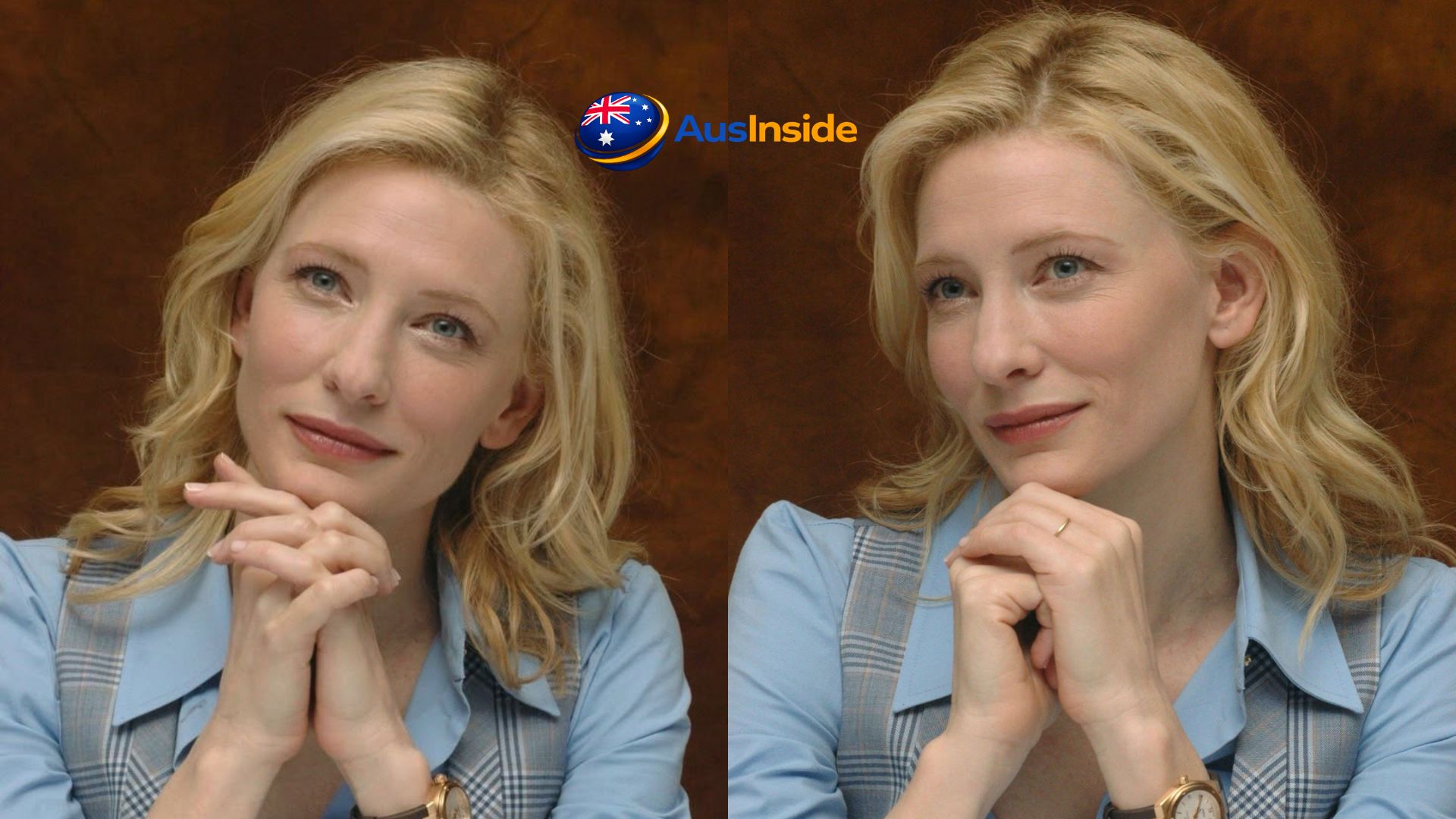
This is the thing, when hearing about Cate Blanchett, there is no need to think only about acting because transformation is what really comes into mind. This woman knows how to disappear behind the mask of her characters so that nobody would realize who they are looking at.
Blanchett’s career includes many brilliant works such as Queen Elizabeth I and Lydia Tár, but there is one more common trait between her characters—they all look professionally crafted and carefully planned.
It is not a secret for anyone who knows something about Hollywood that there is an abundance of talented actors out there. However, few can be proud of combining popularity, domination in critical reviews, and credibility. Cate Blanchett has managed to do so multiple times already.
When you learn how to combine all three traits mentioned above and create amazing masterpieces, you will understand why other actors cannot do the same.
- Overview
- Background and Early Life
- Who Is Cate Blanchett? (Beyond the Obvious)
- Career Highlights and Key Performances (With Analysis)
- What Makes Her Acting Style Unique (And Successful)?
- Cate Blanchett’s Acting Process
- How Cate Blanchett Prepares for Roles
- Cate Blanchett vs Other Top Actors
- Biggest Challenges and Career Risks
- Awards and Career Milestones
- Business Strategy: How She Made the Career That Others Could Not
- Impact and Influence: More Than Awards
- Lessons You Can Learn
- Scenario in Real Life: How to Change the Course of Your Career
- Key Takeaways
- Conclusion: Why Cate Blanchett Dominates
- FAQ
Overview
| Category | Details |
| Full Name | Catherine Élise Blanchett |
| Born | May 14, 1969 (Melbourne, Australia) |
| Profession | Actress, Producer |
| Major Awards | 2 Academy Awards, 4 BAFTAs, 3 Golden Globes |
| Breakthrough Role | Elizabeth (1998) |
| Known For | Transformative acting, vocal control, psychological depth |
| Notable Collaborators | Martin Scorsese, Peter Jackson, Todd Field |
Readers Must Love It:
Background and Early Life
Though we know about Cate Blanchett being very fond of taking walks down the red carpet, she had to start with discipline.
During her growing years in Australia, Cate went through a certain experience related to loss of her father when she was young. Such experiences help develop people’s emotional quotient; they played a big part in developing this skill in Cate as well.
Initially, she pursued higher education in economics and fine arts at the University of Melbourne; however, having discovered the true meaning of art, she switched majors and went to the famous National Institute of Dramatic Art (NIDA).
While most of the other actors are motivated solely by the prospect of fame, Cate took the path of acting on stage.
During several years she was a member of Sydney Theatre Company playing such roles as Hedda Gabler and Hamlet; this gave her an opportunity to practice voice control, posture control, and proper timing skills.
There’s just one little trick that helps to become successful in theater – self-discipline!
Theater doesn’t give you a second chance and does not permit any editing whatsoever.
Who Is Cate Blanchett? (Beyond the Obvious)
Surely, Cate Blanchett can be described as an award-winning actress. This is true – but far from enough.
This is an actress who creates characters.
Unlike others who are charismatic, she has managed to develop skills of creating characters from scratch, including:
- Voice patterns
- Body language
- Motivation
In other words, we will be speaking about her acting in the movie “Elizabeth” (1998). Acting as a queen, as well as her acting of a woman who changes from a weak person into a strong one during all the time in the film.
We will speak about her acting in the movie “Blue Jasmine” (2013). It means her acting of a man who is breaking down as a result of permanent mental pressure. Her voice shakes; gestures express nervousness. Everything was planned in advance.
We will speak about her acting in the movie “I’m Not There” (2007). There she played a made-up character of a singer-songsong writer Bob Dylan. To play such a role was simply impossible for her. She didn’t play him but acted his soul.
That is the difference.

Career Highlights and Key Performances (With Analysis)
Breakthrough Role: Elizabeth (1998)
And this wasn’t simply a breakout performance but an announcement.
Blanchett based her acting on historical documentation of the royal and how a queen behaved. For her portrayal, Blanchett was nominated for an Oscar and immediately placed herself amongst great performers.
Precision Acting: The Aviator (2004)
Collaborating with Martin Scorsese, she has played the character of Katharine Hepburn. The trick is that unlike many other actors who try parodizing her, she has managed to copy:
- Speech rhythm
- Mid-Atlantic accent
- Physical appearance
Due to the fact, she has received the Oscar for the Best Supporting Actress, and she became one of the rare actresses winning Oscar for portraying Oscar winner.
Psychological Depth: Blue Jasmine (2013)
Performing in the Blue Jasmine, Cate has impressed the critics to such an extent that they awarded her with Academy Awards for the Best Actress.
For playing the role of the woman breaking down psychologically, she has:
- Studied different cases
- Performed a detailed analysis of:
- Erratic speech pacing
- Fragmentation of emotions
- Subtle denial patterns
For such a perfect performance, she has won the Academy Awards.
Total Immersion: Tár (2022)
However, not everybody knows that in order to perform a part in Tár:
- She has learned to conduct an orchestra
- Practiced piano
- Was speaking German fluently
Thanks to such dedication, she has managed to perform in a realistic way. So, she played so realistically that many people believe she is indeed a conductor.
Incredible Blockbuster Presence: The Lord of the Rings
Collaborating with Peter Jackson, Cate Blanchett has participated in playing a character of Galadriel. Even though this role required minimal time of appearance, she demonstrated enormous charisma, using:
- Controlled voice projection
- Stillness
What Makes Her Acting Style Unique (And Successful)?
Now let us discuss Cate Blanchett’s acting technique in detail.
First of all, it should be said that the actress’ technique can be considered somewhere between classical training and contemporary realism. Indeed, many actors prefer method acting (as, for example, Daniel Day-Lewis who always stays in character), Cate prefers transformations:
- Vocal modulation
- Body posture
- Emotional state
What professionals can learn from it?
As can be seen from all of the above, mastery is not just luck or nature – it is a matter of learning and following specific rules.
Cate Blanchett’s Acting Process
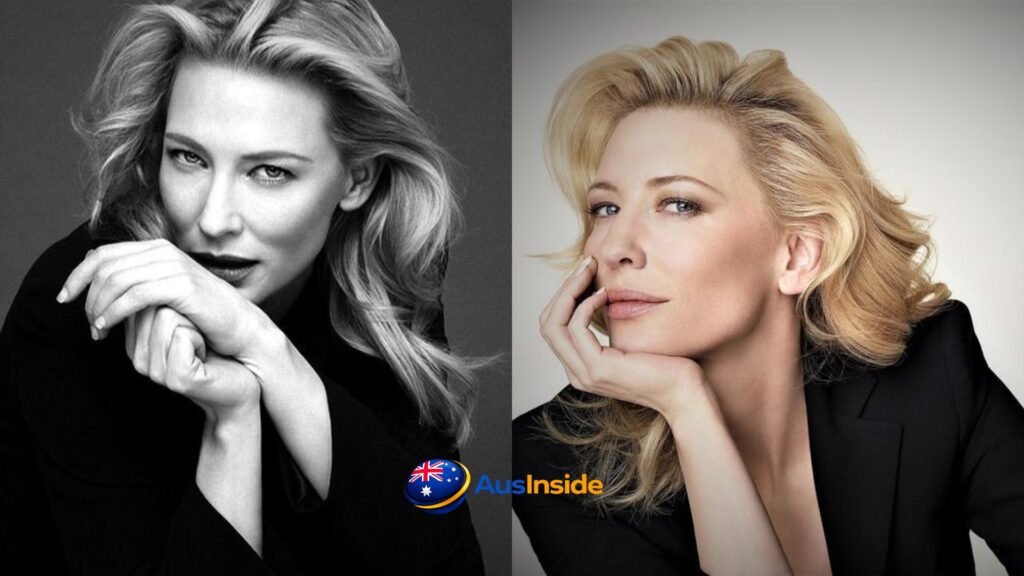
Cate Blanchett follows a highly structured and technical acting process. Instead of relying on emotions alone, she builds characters step by step using physical, vocal, and psychological techniques.
- Builds characters through detailed psychological mapping
- Uses voice modulation to define personality traits
- Controls posture to express power dynamics
- Studies scripts deeply before performance execution
- Separates personal identity from character completely
- Focuses on precision rather than emotional improvisation
You May Love It: Australia Native Plants
How Cate Blanchett Prepares for Roles
Preparation is where Blanchett truly stands out. She invests months learning skills that most actors would avoid, making her performances feel authentic and realistic.
| Film | Preparation Method | Key Skill Developed |
|---|---|---|
| Tár (2022) | Learned conducting, practiced piano daily | Musical direction realism |
| The Aviator (2004) | Studied Katharine Hepburn interviews deeply | Voice and accent mastery |
| Elizabeth (1998) | Researched royal behavior and history | Authority and posture control |
| Blue Jasmine (2013) | Analyzed psychological breakdown patterns | Emotional instability portrayal |
Cate Blanchett vs Other Top Actors
What sets Cate Blanchett apart is her technical approach compared to other elite actors like Daniel Day-Lewis and Meryl Streep.
- Relies on technique instead of method immersion
- Avoids staying in character off-screen always
- Focuses on controlled transformation, not spontaneity
- Balances theater discipline with film realism effectively
- Maintains versatility across genres and character types
- Builds roles systematically rather than emotionally reacting
Biggest Challenges and Career Risks
Behind her success, Cate Blanchett has taken several career risks that could have easily failed but instead strengthened her reputation.
- Played unconventional roles like Bob Dylan character
- Accepted complex roles lacking mainstream appeal initially
- Balanced theater career alongside Hollywood commitments consistently
- Avoided typecasting despite global blockbuster success fame
- Chose challenging scripts over commercially safe options
- Maintained privacy limiting excessive media exposure deliberately
Awards and Career Milestones
Cate Blanchett’s career is backed by major awards and global recognition, proving both critical and commercial success.
| Year | Achievement | Category |
|---|---|---|
| 1998 | Academy Award Nomination (Elizabeth) | Best Actress |
| 2004 | Academy Award Win (The Aviator) | Best Supporting Actress |
| 2013 | Academy Award Win (Blue Jasmine) | Best Actress |
| 2015 | Co-Artistic Director (Sydney Theatre Company) | Leadership Role |
| 2022 | Venice Film Festival Best Actress (Tár) | International Recognition |
Business Strategy: How She Made the Career That Others Could Not
Certainly, there is something that makes the career of Cate Blanchett extraordinary – and it certainly exists.
Strategic Role Selection
Unlike other actors who are obsessed with fame, she selects both popular and indie movies.
Reputation Building Instead of Visibility
In addition, she tries to avoid overexposing in media, making people admire her.
Use of Theater Practice to Maintain Skills
While many people try to forget their origins and not practice anymore, she continues doing it. Thus, she acts in the theater – similarly to world-class athletes who do basic exercises regularly.
Long-term Cooperation With Directors
Collaborating with directors such as Scorsese or Todd Field allows her to show her professionalism, while long-term collaboration is very valuable in the industry.
That is why the fact that her career continues for decades does not surprise anybody.
You May Like It: Vodafone Mobile Plans
Impact and Influence: More Than Awards
Indeed, Cate Blanchett is not only a great actress but a person who changed industry standards.
Changing Stereotypes about Leading Roles
Movies such as Tár and Blue Jasmine have created leading roles for actresses, thus breaking stereotypes.
Industry Leadership
As one of the co-artistic directors of the Sydney Theatre Company, she contributes to its worldwide fame.
International Activities
Acting for the UNHCR and visiting refugee camps, she spreads information.
Cultural Heritage
For example, her performance of Galadriel has completely changed the approach towards portraying female heroes in fantastic movies.

Lessons You Can Learn
Now you are aware of the main facts about the career of this actor. Let us consider some tips we can get from it.
- Skills First, Exposure Later
Like many artists, she spent many years developing skills before becoming mainstream. - Depth Is More Than Hype
Long-lasting hype does not work – depth works. - Versatility Equals Lifelong Success
Do not limit your opportunities; be versatile in everything. - Choose Challenging Projects
Challenging projects are the only thing that provides opportunity for development. - Focus on Long-Term Projects
Projects that are successful require proper planning.
Scenario in Real Life: How to Change the Course of Your Career
Let us imagine that you are in a situation when you have to make two choices:
- High-paid, easy movie role with massive exposure.
- Difficult role that improves your reputation and challenges you.
Which of the two would you choose? Most likely, Cate Blanchett will choose the second one.
Working on the role of Tár was not commercially beneficial but improved her reputation in the industry significantly.
Why is this possible?
Because reputation and credibility are extremely valuable – much more than visibility.
Key Takeaways
- Cate Blanchett is a master in both technical and psychological acting
- Her technique is the result of combination of theater experience and film precision
- Success of the actress is a result of consistent strategy, not luck
- She succeeded in balancing blockbuster success and artistic credibility
- She made considerable influence in both cultural and political spheres
Don’t Forget To Read It: Gina Rinehart
Conclusion: Why Cate Blanchett Dominates
But let’s face reality—it won’t be enough to rely on talent for your whole career.
- Strategy would do that.
- Discipline would do that.
- So would craft.
The case of Cate Blanchett is no different—in addition to having had an impressive career, everything she did to reach this point was well thought out and carefully considered.
What can we conclude from this?
If you are striving to become successful in any profession, such as acting, running a company, or in general living a long-term life, mere talent isn’t enough.
- It takes something more to succeed.
- Cate Blanchett didn’t stumble into her success.
- She earned it.
FAQ
What is Cate Blanchett famous for?
She is famous for such movies as Elizabeth, The Aviator, Blue Jasmine, and The Lord of the Rings.
How many Oscars has she won?
She has won two Oscars for movies The Aviator and Blue Jasmine.
What is unique about her acting style?
Her acting style combines technical perfection and deep emotions.
Did Cate Blanchett study acting professionally?
Yes, she has been trained in NIDA, as well as received experience of acting in theater.
Does Cate Blanchett do anything except acting in films?
In addition to performing in movies, she also leads a theater company and participates in charitable activities organized by the UNHCR.
What lessons can be learned from her experience?
Building skills, selecting challenging projects, focusing on depth.
Check: Woolworths Gift Cards